HAQAST Massachusetts
The HAQAST Public Meeting in Cambridge, Massachusetts was held June 4th and 5th, 2024 at the Massachusetts Institute of Technology, with the pre-meeting early-career workshop co-organized with the Health Effects Institute on June 3rd.
The Health and Air Quality Applied Sciences Team (HAQAST) works to connect NASA satellite data and products with public health experts and air quality managers. Our team of 14 PIs and 60+ total collaborating investigators has grown to support and serve hundreds of organizations across the U.S. and around the world. Our public meetings are opportunities to grow these two-way dialogues in which stakeholders share their research needs and priorities, and scientists share their resources, insights, and new discoveries.
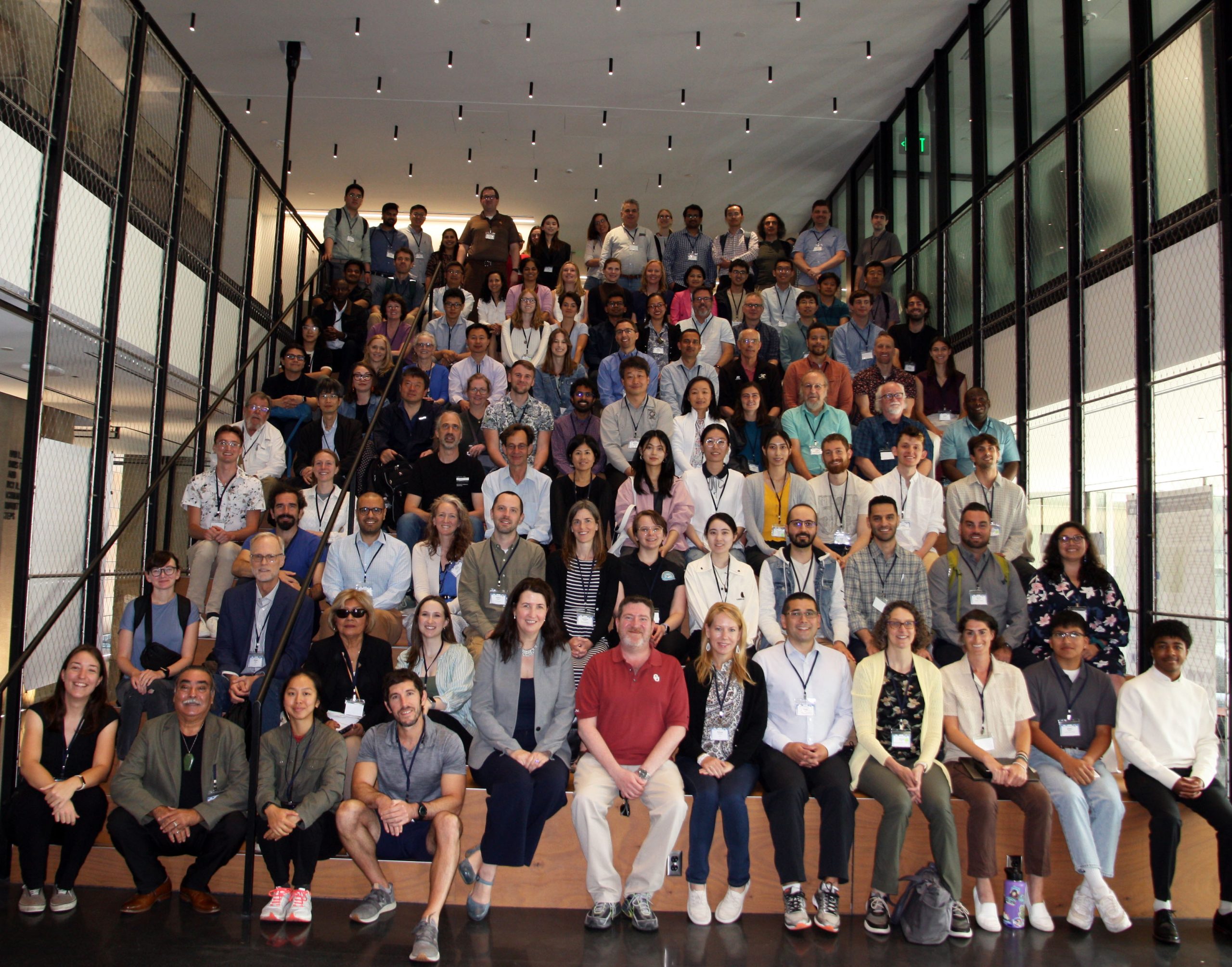
The Health and Air Quality Applied Sciences Team (HAQAST) works to connect NASA satellite data and products with public health experts and air quality managers. Our public meetings are opportunities to grow these two-way dialogues in which stakeholders share their research needs and priorities, and scientists share their resources, insights, and new discoveries. This meeting highlighted how satellite data informs climate change adaptation and mitigation, applications from TEMPO, applications for satellite data in a changing regulatory landscape, and more!
June 4th
- Session 1A – Overview of NASA
HAQAST - Session 1B – Facilitating the Use of Satellite Data by the Novice User
- Session 2A – Health and Air Quality Applications of TEMPO
- Session 2B – Adapting to Climate Change: Heat, Air Pollution, and Human Health
- Session 3A – Emerging Ground Networks for Satellite Data Integration
- Session 3B – How Satellite Data Can Inform Fires, Exceptional Events Demonstrations, and New Standards
- Session 4A – TROPOMI-OMI Meeting Crossover: 20 Years of NO2 Applications from OMI and TROPOMI
- Flash Talk and Poster Session
June 5th
- Session 5A – Satellite Data for Climate Change Decision Making: Measuring Greenhouse Gas Emissions and Air Quality Co-Benefits
- Session 5B – Satellite Data for Global Air Quality and Health
- Session 6A – Environmental Justice: Data Needs to Protect Health of At-Risk Populations
- Session 6B – Calculating Long-Range Pollution Transport and Forecasting Air Pollution
- Session 7A – Closing Remarks and HAQAST Ambassador Perspectives: Using Satellite Data to Improve Health and Air Quality Monitoring
Session 1A
Overview of NASA HAQAST
Opening Remarks
Arlene Fiore (Massachusetts Institute of Technology)
HAQAST Updates – Summer 2024
Tracey Holloway (HAQAST Team Leader, University of Wisconsin–Madison)
Explore Earth – HAQAST Massachusetts 2024
John Haynes (Program Manager for Health and Air Quality Applications)
Session 1B
Facilitating the Use of Satellite Data by the Novice User
Tracey Holloway (University of Wisconsin–Madison)
Jenny Bratburd (University of Wisconsin–Madison)
Susan Anenberg (George Washington University)
Dan Goldberg (George Washington University)
Randall Martin (Washington University in St. Louis)
Jingqiu Mao (University of Alaska, Fairbanks)
Jennifer McGinnis (Colorado State University)
Arlene Fiore (Massachusetts Institute of Technology)
Yang Liu (Emory University)
Qian Xiao (University of Texas Health Science Center at Houston)
Daniel Tong (George Mason University)
Session 2A
Health and Air Quality Applications of TEMPO
Health & AQ Applications of TEMPO
Moderator: Aaron Naeger (NASA Marshall / TEMPO Missions Application lead)
TEMPO Air Quality Applications
Doug Boyer and Chola Regmi (Texas Commission on Environmental Quality)
Updates from a 2023 Tiger Team
Arlene Fiore (HAQAST Member and Tiger Team Lead, Massachusetts Institute of Technology)
From TEMPO Columns to Surface Air Quality
Tracey Holloway (HAQAST Team Lead, University of Wisconsin—Madison)
The TEMPO satellite mission: Overview and status
Caroline Nowlan (Harvard Smithsonian Astrophysical Observatory)
Session 2B
Adapting to Climate Change: Heat, Air Pollution, and Human Health
Moderator: Daniel Tong (HAQAST Member, George Mason University)
Ground Urban Heat Island (GUHI)
Leiqiu Hu (University of Alabama in Huntsville)
Chelsea Langer (New Mexico Department of Health)
Wildfire in Alaska and its impact on air quality and public health
Jingqiu Mao (HAQAST Member, University of Alaska, Fairbanks)
The All of Us Research Program
Sheri Schully (National Institute of Health)
Session 3A
Emerging Ground Networks for Satellite Data Integration
Atmospheric Science and Chemistry mEasurement NeTwork (ASCENT)
Moderator: Ted Russell (HAQAST Member and Tiger Team Lead, Georgia Institute of Technology)
Ground-Based Pandora Observations in Support of Satellite-Derived NO2 and HCHO
Jeff Geddes (Boston University)
Love My Air Denver Partnership
Sarah Kroening (Children’s Health Alliance of Wisconsin)
The Surface Particulate Matter Network (SPARTAN) for Health and Air Quality Application
Randall Martin (HAQAST Member, Washington University in St. Louis)
Potential for well-calibrated air sensors to enhance utility of satellite retrievals for air quality management
Dan Westervelt (Columbia University)
Session 3B
How Satellite Data Can Inform Fires, Exceptional Events Demonstrations, and New Standards
Moderator: Susan Anenberg (HAQAST Member, George Washington University)
Yang Liu (HAQAST Member and Tiger Team Lead, Emory University)
Exceptional Events from the Ground Up: Case Study of Cheyenne NCore During 2020
Leif Paulson (Wyoming Department of Environmental Quality)
Enhancing Emissions in our Nation’s National Fire Emissions Inventory
Emily Gargulinski (HAQAST Member, National Institute of Aerospace, NASA Langley Research Center)
Tracking Particulate Matter in Oklahoma using Satellite Data
Malcolm Zachariah and Braxton Edwards (Oklahoma Department of Environmental Quality)
Session 4A
TROPOMI-OMI Meeting Crossover: 20 years of NO2 applications from OMI and TROPOMI
Moderator: Arlene Fiore (HAQAST Member and Tiger Team Lead, Massachusetts Institute of Technology)
HAQAST Massachusetts NASA Health and Air Quality Applied Sciences Team
Ellen Burkhard (New York State Energy Research and Development Authority)
20 Years of Health and Air Quality Applications Enabled by OMI Data
Bryan Duncan (HAQAST Member, NASA Goddard Space Flight Center)
Connecticut DEEP Using Satellite Data over 20 Years
Michael Geigert (Connecticut Department of Energy and Environmental Protection)
Applications of OMI and TROPOMI NO2 satellite data for Public Health at Urban Scales
Dan Goldberg (George Washington University)
Session 5A
Satellite Data for Climate Change Decision Making: Measuring Greenhouse Gas Emissions and Air Quality Co-Benefits
Moderator: Chris Uejio (HAQAST Member, Florida State University)
Tracking urban progress towards climate and environmental goals
Susan Anenberg (HAQAST Member, George Washington University)
Overview: The U.S. Greenhouse Gas Center
Shanna Combley (NASA HQ)
Satellite Data for Climate Change Decision Making: Measuring Greenhouse Gas Emissions and Air Quality Co-Benefits
Eric Choi (GHGSat)
Petrochemicals, air emissions, and the law
Libby Mohr (Environmental Defense Fund)
Use of Adjoint Modeling with Satellite Data and CO2 Control Benefits
Ted Russell (HAQAST Member and Tiger Team Lead, Georgia Institute of Technology)
Session 5B
Satellite Data for Global Air Quality and Health
Moderator: Randall Martin (HAQAST Member, Washington University in St. Louis)
Global Air Quality and Health: Lessons from HAQAST-funded Research in Latin America
Kevin Cromar (New York University)
Enhancing the Children’s Climate Risk Index (CCRI)
Dohyung Kim (UNICEF)
Characterizing Highly Resolved Air Pollutant Concentrations and Their Spatio-temporal Uncertainty
Marianthi-Anna Kioumourtzoglou (Columbia University)
Applications for satellite data in air quality and health
Pallavi Pant (Health Effects Institute)
Session 6A
Environmental Justice: Data Needs to Protect Health of At-Risk Populations
Moderator: Yang Liu (HAQAST Member and Tiger Team Lead, Emory University)
Environmental Data and Studies of Behavioral Cancer Risk
Kilan Bishop (American Cancer Society)
Jesse Marquez (Coalition For A Safe Environment)
Air pollution in under-monitored and rural regions
Jeff Pierce (HAQAST Member, Colorado State University)
Qian Xiao (HAQAST Member and Tiger Team Lead, University of Texas Health Science Center at Houston)
Session 6B
Calculating Long-Range Pollution Transport and Forecasting Air Pollution
Moderator: Bryan Duncan (HAQAST Member, NASA Goddard Space Flight Center)
Transportation of Smoke Plumes from Fires in Georgia
Byeong-Uk Kim (Georgia Environmental Protection Division)
Impact of Canadian Wildfires on Lake Michigan Air Quality during July 2023
Brad Pierce (HAQAST Tiger Team Lead, University of Wisconsin—Madison)
Transboundary Air Pollution Linked to Burning and Industry in Mexicali
Monica Soucier (Imperial County Air Pollution Control District)
Multi-Agency Embemble Wildfire PM2.5 Forecast: Towards Community Consensus
Daniel Tong (HAQAST Member, George Mason University)
Session 7A
Closing Remarks and HAQAST Ambassador Perspectives: Using New Satellite Data to Improve Health and Air Quality Monitoring
Moderator: Tracey Holloway (HAQAST Team Lead, University of Wisconsin—Madison)
Featuring HAQAST Ambassadors: Doug Boyer, Pallavi Pant, Allison Patton, Libby Mohr, Byeong-Uk Kim, Michael Geigert
Virtual Flash Talks
Tsz Kin Siu (Dalhousie University)
Evaluating Column-Surface NO2 Agreement in Ontario and Quebec
Shay Nair Sharma (Stanford University)
Space-Enabled Solutions for Health and Air Quality
Colleen Rosales (OpenAQ)
OpenAQ Platform
Gordon Rates (AirNode)
X-Ray Specs for Air Quality
In-Person Flash Talks
Susana B. Adamo (CIESIN-Columbia University)
Tree cover, air pollution and heat in New York: a rural-urban narrative
Jaime Benavides (Columbia University)
Renato Berlinghieri/David Burt (Massachusetts Institute of Technology)
Can individuals use smoke forecasts for personal decision-making? A call to action
Yun Hang (University of Texas Health Science Center at Houston)
Using NASA Earth Observations to Support Environmental Justice Communities in Atlanta, GA
Patrick Kinney (Boston University School of Public Health)
Accounting for the health benefits of air pollution regulations in China, 2008-2019
Carl Malings (Morgan State University)
Air Quality Forecasting with Uncertainty Quantification by Fusing model, satellite, and in-situ data
David Moroni (NASA JPL)
Open Source Air Quality Data and User Tools/Tutorials Provided by the NASA TROPESS Project
Langston Verdin (MKE Fresh Air Collective)
Posters
Matthew Alvarado (Atmospheric and Environmental Research)
Investigating Sources of PM2.5 in Texas

Renato Berlinghieri (Massachusetts Institute of Technology)
Can individuals use smoke forecasts for personal decision-making? A call to action

Zhiwei Dong (University of Alaska Fairbanks)
Using Machine Learning to Reconstruct Historical Surface PM2.5 in Summer Alaska

Stephanie Elkins (Massachusetts Institute of Technology)
Atmospheric Composition and Climate Responses to US Air Pollution Controls

Sarah Hafer-Martin (NASA LaRC; Atmospheric Science Data Center)
Spatial Metadata Simplification for TEMPO

James Hagan (American Ecotech / Ambilabs)
Ground Truthing Enclosures and Instrumentation for Measuring Criteria Pollutants

Sina Hasheminassab (NASA JPL)
NASA’s Open Source Integrated Analytic Platform for Air Quality and Wildfire

Xiaomeng Jin (Rutgers University)
Observing the impacts of wildfires on ozone-NOx-VOC-aerosol chemistry from space

Binita KC (NASA GES DISC/Adnet Systems Inc
Harvesting Publications for Air Quality and Health Data

Emma Knowland (Morgan State University, GESTAR-II; NASA GMAO)
NASA GEOS Composition Forecast System, GEOS-CF: TEMPO Support

Joseph Kozminski (Lewis University)
Identifying Census Tracts for PM2.5 Monitoring in the Joliet IL Area Using the CVI Tool and Local Data

Meryl Kruskopf (University of Alabama Huntsville, SERVIR)

Air Quality in South Asia: Understanding the Challenges of Integrating Earth Observations into Operations
Vijay Kumar and Carlos Carrillo-Gallegos (Columbia University and Massachusetts Institute of Technology)
Bayesian Nonparametric Ensemble (BNE) algorithm for predictions of high spatiotemporal PM2.5 concentrations
Tabitha Lee (University of Houston)
Heatwave Effects on NO2 Concentrations and Populations in Houston, TX

Hazem Mahmoud (NASA LaRC ASDC ADNET)
Impact of Canadian Wildfires 2023 on North Atlantic’s Region Air Quality : An Analysis Using ASDC Data

Jennifer McGinnis (Colorado State University)

Satellite Detection of Dust
Kazuyuki Miyazaki (NASA JPL)
Supporting health impact assessment using satellite-derived emission and air quality data

Gabriel Mojica (NASA LaRC ASDC)
Atmospheric Science Data Center’s Suborbital Tools and Services

Xiaohua Pan (NASA GSFC/GES DISC)
Update of HAQAST Products at NASA GES DISC: Data and Resources

Elise Penn (Harvard University)

A proposed top-down/bottom-up inventory for coal mine methane emissions using remote sensing observations
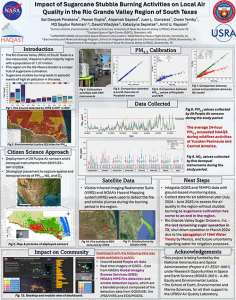
Sai Deepak Pinakana (University of Texas at Rio Grande Valley)
Impact of Stubble Burning Activities on Local Air Quality in the Rio Grande Valley of South Texas
Minghao Qiu (Stanford / Stony Brook University)
Wildfire smoke exposure and mortality burden in the US under future climate change

Mukesh Rai (NASA/JPL- Caltech)
Exploring the role of atmospheric rivers in extreme air pollution events

Alqamah Sayeed (USRA/NASA-MSFC – SERVIR)
Breathing Easy: How SERVIR Applies Research to Address Air Quality Challenges in Data Scarce Regions

Junhyeon Seo (NASA GFSC)
PM2.5 3-day Forecasting at U.S. Embassy Locations using Machine Learning

Amir Souri (NASA GSFC/GESTARII)
First Ozone Production Rate Estimates from Space
Madankui Tao (Columbia University / Massachusetts Institute of Technology)
Contrasting Spatial Responses in Air Pollution to Hourly Anthropogenic Emissions in the Contiguous United States

Chang-Fu Wu (National Taiwan University)
Applying a Fusion Approach of GAM and XGBoost to Predict Spatiotemporal Distributions of Daily Elemental PM2.5 in Taiwan
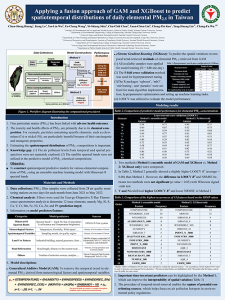
Xinran Wu (University of Wisconsin–Madison)
Characterizing multi-pollutant emission impacts of sulfur reduction strategies from coal power plants
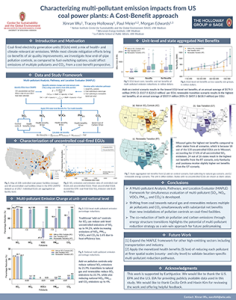
Yuanyu Xie (Princeton University)
County level understanding of the health impacts of increasing wildfire smoke

HEI – HAQAST Workshop
HEI and HAQAST Early Career Health and Atmospheric Science Workshop
This Health Effects Institute and HAQAST workshop is geared toward early career researchers in atmospheric science and remote sensing interested in building connections and creating health-relevant research proposals. We will cover some of the key challenges in using satellite data for health applications, ways people overcome these challenges, and opportunities for funding and collaboration.
View Agenda
Photos

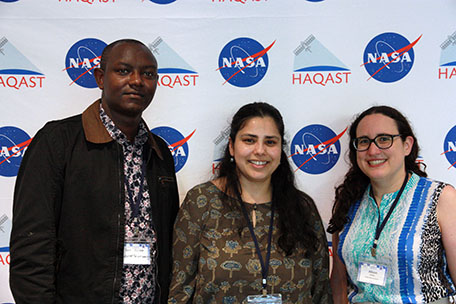
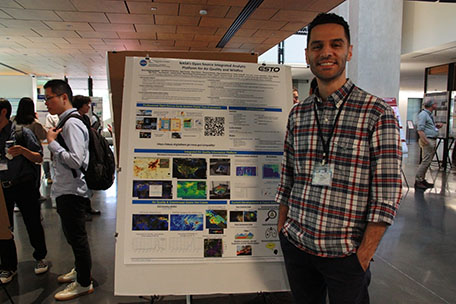
To view the complete collection of photos, click on the button below: