
HAQAST St. Louis
The Health and Air Quality Applied Sciences Team (HAQAST) works to connect NASA satellite data and products with public health experts and air quality managers. Our team of 14 PIs and 70+ total collaborating investigators has grown to support and serve hundreds of organizations across the U.S. and around the world. Our public meetings are opportunities to grow these two-way dialogues in which stakeholders share their research needs and priorities, and scientists share their resources, insights, and new discoveries.
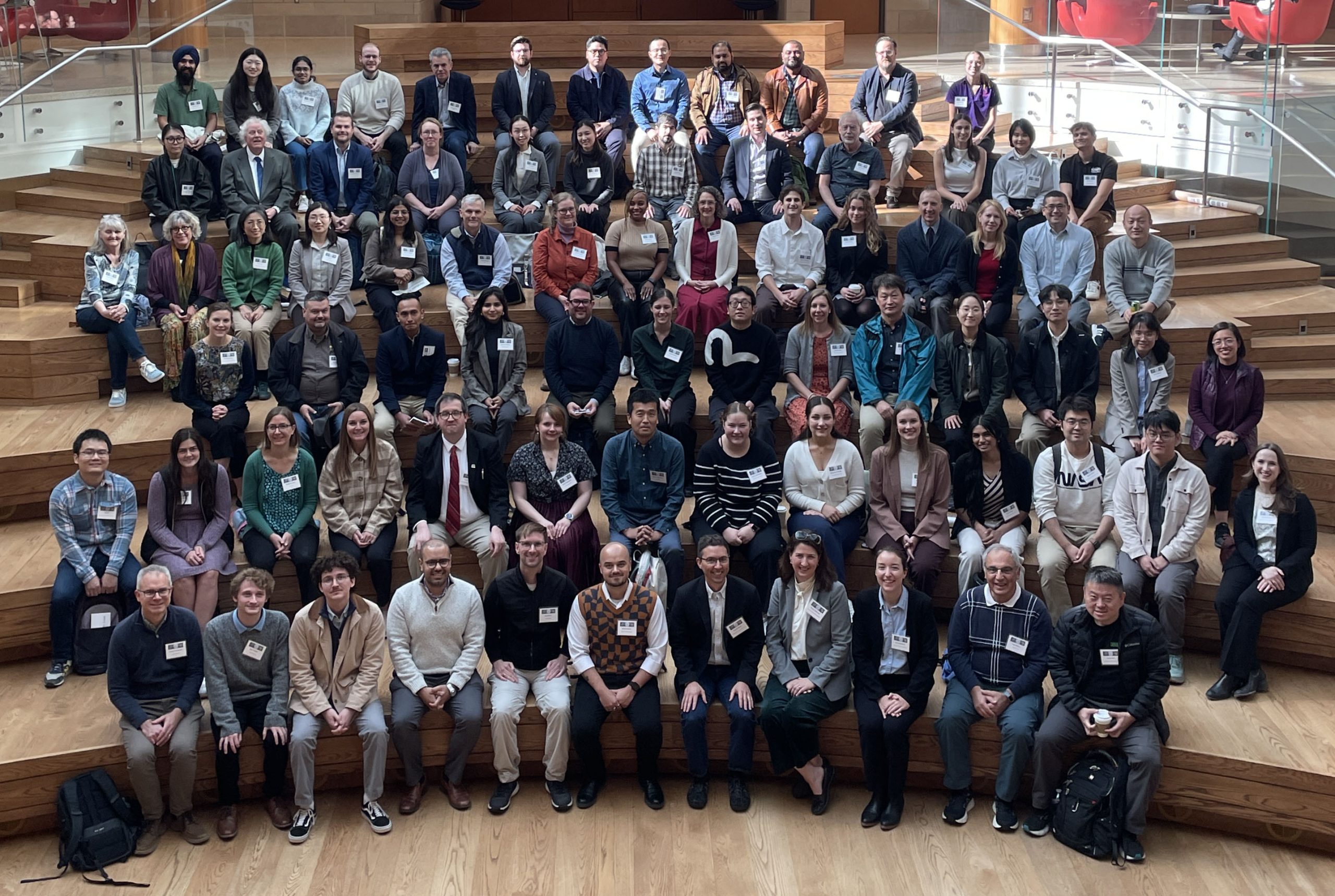
This meeting was held in-person and online November 6th – 7th, 2025 at the Knight Center at Washington University in St. Louis, kicking off the new HAQAST team. This meeting highlighted new HAQAST member projects and explored topics areas such as satellite data for different sectors including industry and education, applications for forecasting smoke and dust, regulatory compliance, and public health, across scales from local to global.

November 6th, 2025
- Session 1A: Overview of NASA HAQAST
- Session 2A: Improving Surface Fine Particulate Matter (PM2.5) Estimates Using Satellite Data
- Session 2B: Heat and Compound Events Health Impacts
- Session 3A: Forecasting and Near Real Time Monitoring of Smoke and Air Quality Impacts from Wildland Fires
- Session 3B: Predicting Ozone Formation: Advances with TEMPO
- Session 4A: Remote Sensing for Remote Regions: Improving Decision-Making on Dust and More
- Session 4B: Improving Emissions Inventories with Satellite Data
Session 1A: Overview of NASA HAQAST
Moderator: Randall Martin (HAQAST Member, Washington University in St. Louis)
Sandro Galea (Dean, Washington University School of Public Health)
Center for the Environment at Washington University
Michael O’Toole (Center for the Environment at Washington University)
Tracey Holloway (HAQAST Team Leader, University of Wisconsin–Madison)
Session 2A: Improving Surface Fine Particulate Matter (PM2.5) Estimates Using Satellite Data
Moderator: Xi Chen (HAQAST Member, University of Iowa)
Advancing Satellite-Derived PM2.5 to Support the Health and Air Quality Management Communities
Randall Martin (HAQAST Member, Washington University in St. Louis)
Chi Li (Washington University in St. Louis)
Children’s Health Alliance of Wisconsin
Sarah Kroening (Children’s Health Alliance of Wisconsin)
Air Quality Research for Electric/Energy Sector Applications
Eladio Knipping (Electric Power Research Institute)
Session 2B: Heat and Compound Events Health Impacts
Moderator: Jeff Pierce (HAQAST Member, Colorado State University)
Earth Observations & Heat Mortality in Las Vegas, Nevada 2017-2024
Chris Uejio (HAQAST Member, Florida State University)
Kilan Bishop (University of Miami Rosenstiel School of Marine, Atmospheric, and Earth Science)
Compounding and Intersecting Landscapes of Physical and Societal Impacts
Adam Schlosser (Massachusetts Institute of Technology)
Xingmei Liu (Massachusetts Department of Environmental Protection) [Virtual]
Session 3A: Forecasting and Near Real Time Monitoring of Smoke and Air Quality Impacts from Wildland Fires
Moderator: Jingqiu Mao (HAQAST Member, University of Alaska, Fairbanks)
Xi Chen (HAQAST Member, University of Iowa)
Examination of the Dollar Lake and Willow Creek Fires on the Pinedale Gaseous Monitoring Station
Leif Paulson (Wyoming Department of Environmental Quality)
Environmental Services Program Air Quality Monitoring and Quality Assurance Unit
David Mendez-Jimenez and Glen Roussin (Missouri Department of Natural Resources)
Air Quality Modeling for wildfires in Alaska
Jingqiu Mao (HAQAST Member, University of Alaska, Fairbanks)
Session 3B: Predicting Ozone Formation: Advances with TEMPO
Moderator: Jen Kaiser (HAQAST Member, Georgia Institute of Technology)
New viewpoint on air pollution from TEMPO
Arlene Fiore (HAQAST Member, Massachusetts Institute of Technology)
Influence of Upwind Emissions and Long Island Sound on Connecticut’s Air Quality
Amanda Fritz (Connecticut Department of Energy and Environmental Protection)
LADCO Needs for Satellite Work related to Ozone Formation
Angela Dickens (Lake Michigan Air Directors Consortium (LADCO))
Determining near real time surface ozone from TEMPO and machine learning
Dan Anderson (HAQAST Member, University of Maryland, Baltimore County)
Session 4A: Remote Sensing for Remote Regions: Improving Decision-Making on Dust and More
Moderator: Carl Malings (HAQAST Member, Morgan State University)
Jeff Pierce (HAQAST Member, Colorado State University)
Air Quality and Health in New Mexico
Chelsea Langer (New Mexico Department of Health)
Jingqiu Mao (HAQAST Member, University of Alaska, Fairbanks)
Pat Reddy (Independent Consultant / University of Wisconsin – Madison)
Due to technical issues the recording of this panel is unavailable. We apologize for the inconvenience.
Session 4B: Improving Emissions Inventories with Satellite Data
Moderator: Arlene Fiore (HAQAST Member, Massachusetts Institute of Technology)
Getting the Timing Right – Diurnal Biases and Decision Support
Jen Kaiser (HAQAST Member, Georgia Institute of Technology)
Use of Satellite Data At Georgia EPD
Byeong Kim (Georgia Department of Natural Resources)
Emily Gargulinski (National Institute of Aerospace)
Venezia Ramirez (Norwalk Unides)
Session 5A: Global Air Quality Monitoring and Forecasting
Moderator: Randall Martin (HAQAST Member, Washington University in St. Louis)
Scaling Data Fusion Tools to Support Local Air Quality Managers in Latin America
Carl Malings (HAQAST Member, Morgan State University)
The economics of air pollution: a growing research agenda
A. Patrick Behrer (World Bank)
Air Quality Monitoring and Forecasting
Junhyeon Seo (Morgan State University)
Accessing Open Air Quality Data
Colleen Rosales (OpenAQ)
Session 5B: Maximizing Value of Satellite Data for Environmental Consulting
Moderator: Chris Uejio (HAQAST Member, Florida State University)
Satellite Data for Environmental Consulting (and More)
Tracey Holloway (HAQAST Team Leader, University of Wisconsin–Madison)
Applications of Satellite Earth Observations to Air Quality and Health at Sonoma Technology
Nathan Pavlovic (Sonoma Technology)
Chris Elvidge (Colorado School of Mines)
Cynthia Randles (Scepter Air Inc)
Session 6A: Charting a Long-Term Path for Broader Satellite Applications
Moderator: Tracey Holloway (HAQAST Team Leader, University of Wisconsin–Madison)

Virtual Flash Talks
Sarah Scott (Duke University, NASA LaRC)
Handling Missing Data through Temporal Forecasting and Spatial Inpainting of High-Resolution TEMPO Observations
High-Resolution Smoke Simulations within NOAA’s Rapid-Refresh Forecasting System with Smoke and Dust (RRFS-SD)
Jiani Yang (California Institute of Technology)
Prediction of ambient PM2.5 chemical components in Southern California using machine learning
Jeanné le Roux (AIR4US Development Team)
AIR4US – Prototyping a Future Air Quality Data and Information Platform
Posters
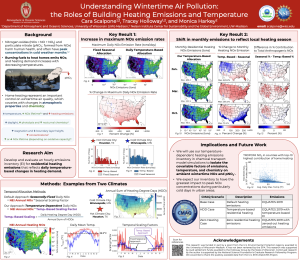
Ahmed Khan Salman (GESTAR II/NASA GSFC)
Transfer Learning for Satellite-Based PM2.5 Estimation: From ABI over CONUS to FCI over Africa with CrossSensor Calibration
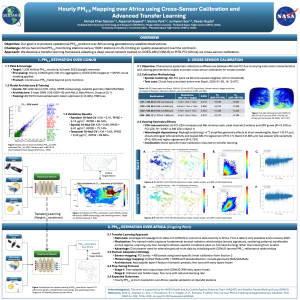
Amit Raysoni (University of Texas Rio Grande Valley)
Impact of Sugarcane Stubble Burning Activities on Local Air Quality in the Rio Grande Valley Region of South Texas
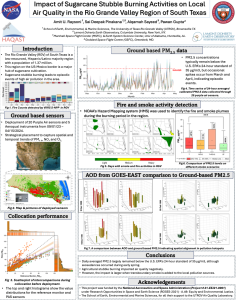
Cara Scalpone (University of Wisconsin–Madison)
Understanding Wintertime Air Pollution: The Roles of Building Heating Emissions and Temperature
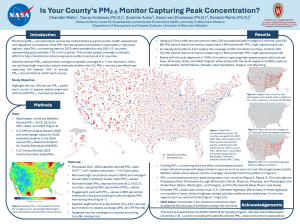
Chandler Wells (University of Wisconsin–Madison)
Is Your County’s PM₂.₅ Monitor Capturing Peak Concentration?
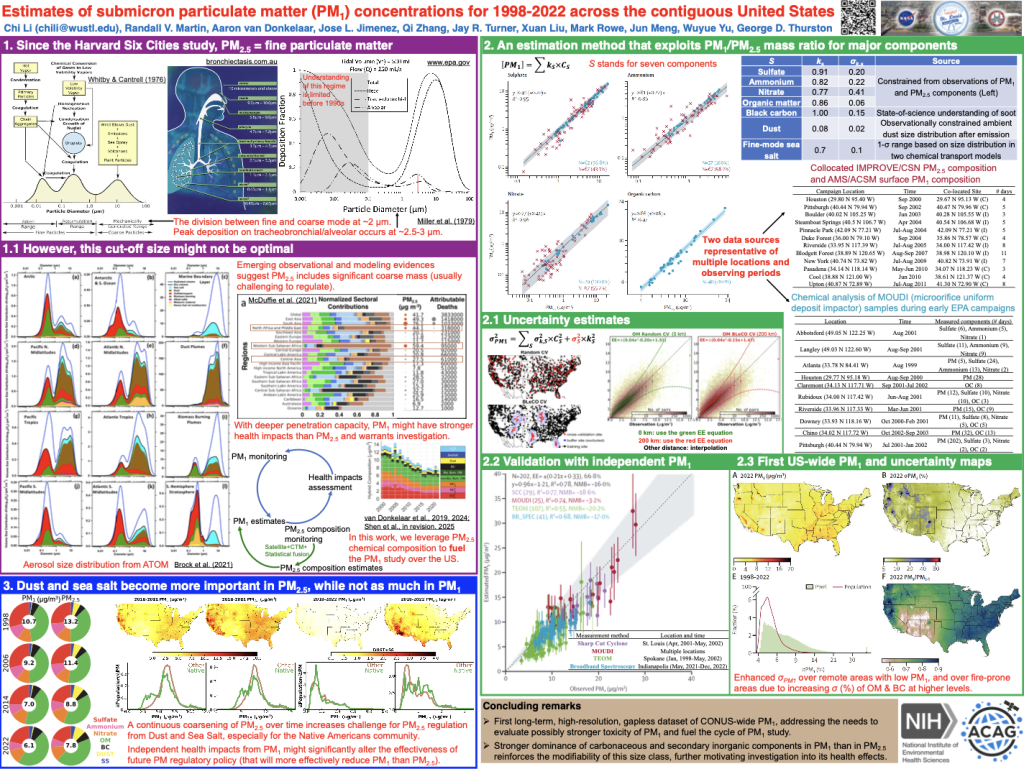
Chi Li (Washington University in St. Louis)
Estimates of submicron particulate matter (PM1) concentrations for 1998-2022 across the contiguous United States
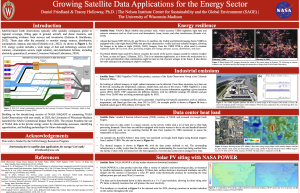
Daniel Friedland (University of Wisconsin–Madison)
Growing Satellite Data Applications for the Energy Sector
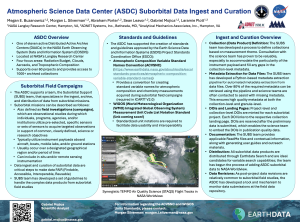
Gabriel Mojica (NASA Langley)
Atmospheric Science Data Center (ASDC) Suborbital Data Ingest and Curation
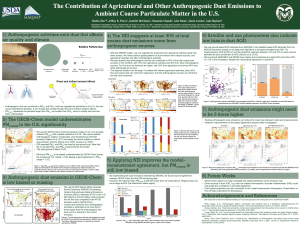
Haihui Zhu (Colorado State University)
The contribution of agricultural and other anthropogenic dust emissions to coarse particulate matter concentrations in the U.S.
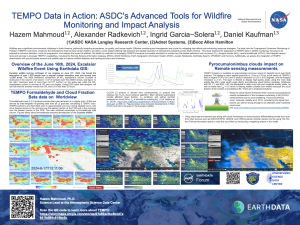
Hazem Mahmoud (NASA LaRC ADNET)
TEMPO Data in Action: ASDC’s Advanced Tools for Wildfire Monitoring and Impact Analysis
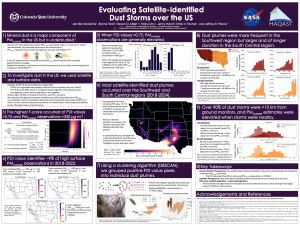
Jennifer McGinnis (Colorado State University)
Evaluating Satellite-Identified Dust Storms over the US
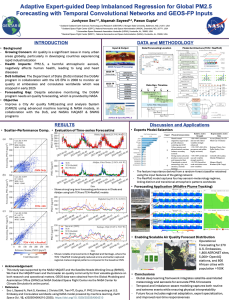
Junhyeon Seo (NASA GSFC/GESTARII MSU)
Adaptive Expert-guided Deep Imbalanced Regression for Global PM2.5 Forecasting with Temporal Convolutional Networks and GEOS-FP Inputs
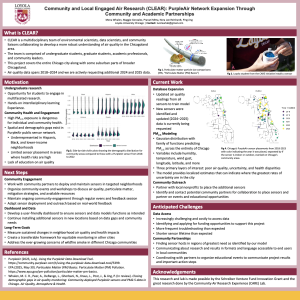
Mena Whalen (Loyola University Chicago)
Community and Local Engaged Air Research (CLEAR): PurpleAir Network Expansion Through Community and Academic Partnerships
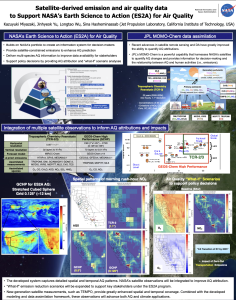
Kazuyuki Miyazaki (NASA JPL)
Satellite-derived emission and air quality data to Support NASA’s Earth Science to Action (ES2A) for Air Quality
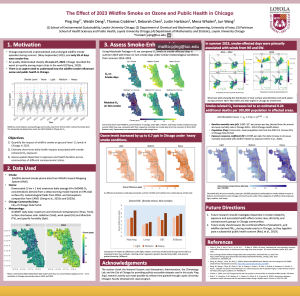
Ping Jing (Loyola University Chicago)
Assessing the Impact of 2023 Wildfire Smoke on Ozone in Chicago
Shubham Sunil Sharma (Washington University in St. Louis)
Design of a coupled flame and cell exposure system for study of combustion particle toxicity
Siyuan Shen (Washington University in St. Louis)
Enhancing Estimation of Daily 1-km Resolution Fine Particulate Matter Concentrations For North America with Deep Learning from Geophysical a Priori Information
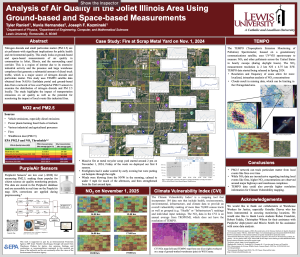
Tyler J Ranieri (Lewis University)
Analysis of Air Quality in the Joliet Illinois Area Using Ground-based and Space-based Measurements
Xinran Wu (University of Wisconsin–Madison)
Early Results on TEMPO Satellite Observations to Evaluate AERMOD Modeling
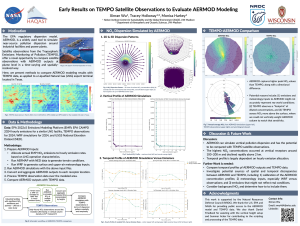
Yanshun Li (Washington University in St. Louis)
Simulating Diurnal Variation of Fine Particulate Matter Composition over Southeastern US using GEOS-Chem
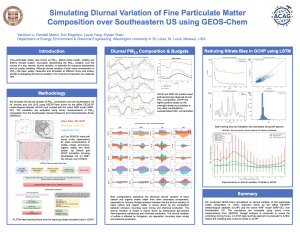
Yi Ji (University of California, Berkeley)
Assessing the Impact of Wildfire Smoke Transport Through Chemical Transport Modeling, Satellite Retrievals, and Ground-
Based Observations of Ozone in Rural Nevada
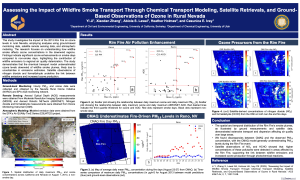
Yuanjian Zhang (Washington University in St. Louis)
Diverging Chemical Evolution of Global PM2.5 in Clean and Polluted Atmosphere from 2003 to 2023
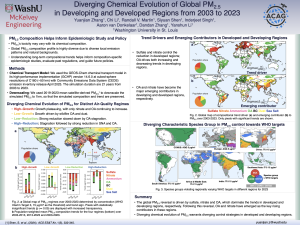
Yuxuan Ren (Washington University in St. Louis)
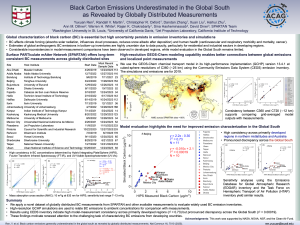
Black Carbon Emissions Underestimated in the Global South as Revealed by Globally Distributed Measurements
Zhiwei Dong (University of Alaska Fairbanks)
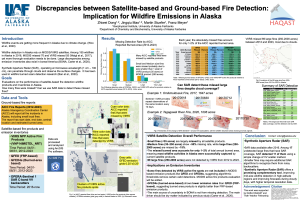
Discrepancies between Satellite-based and Ground-based Fire Detection: Implication for Wildfire Emissions in Alaska
Photos
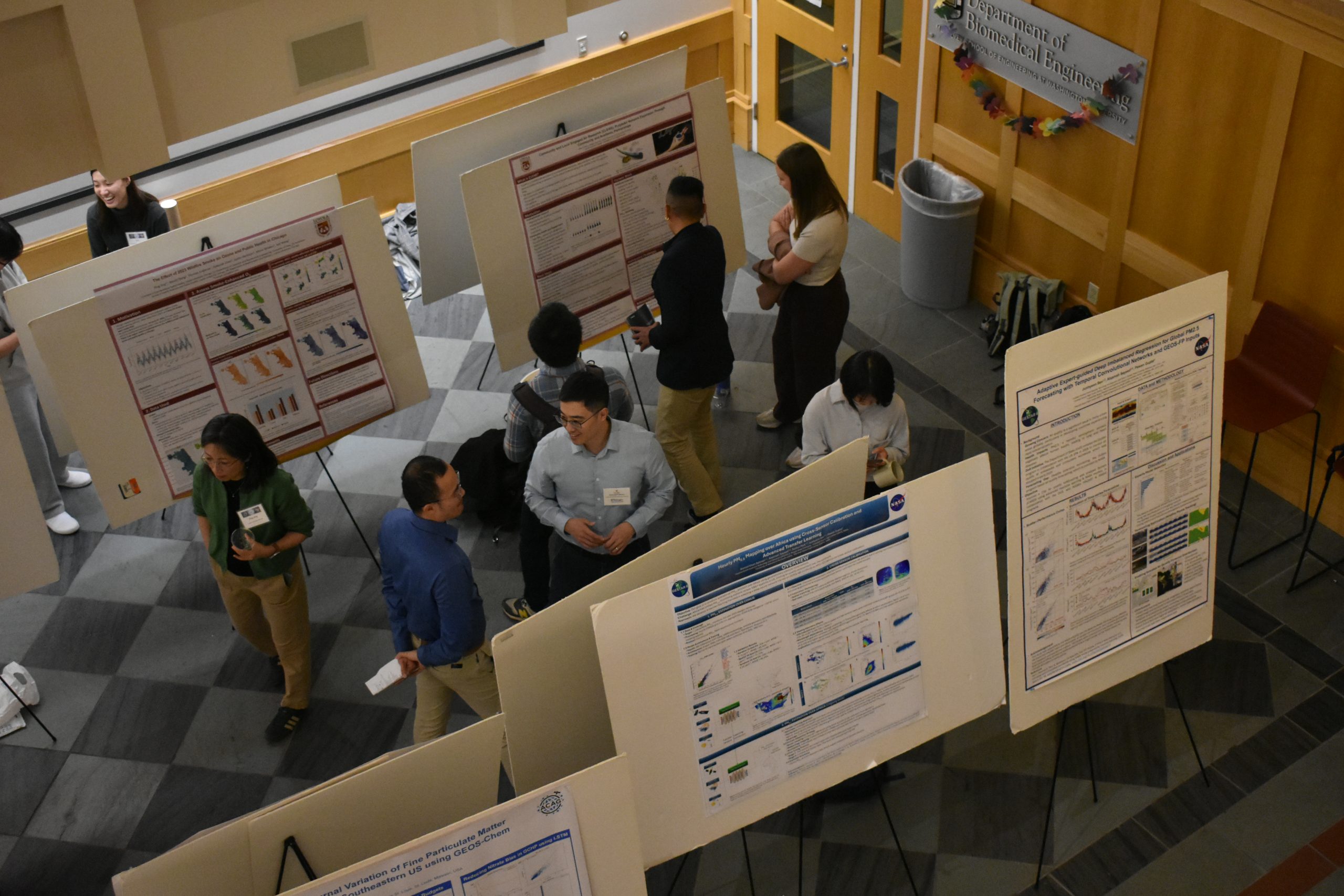
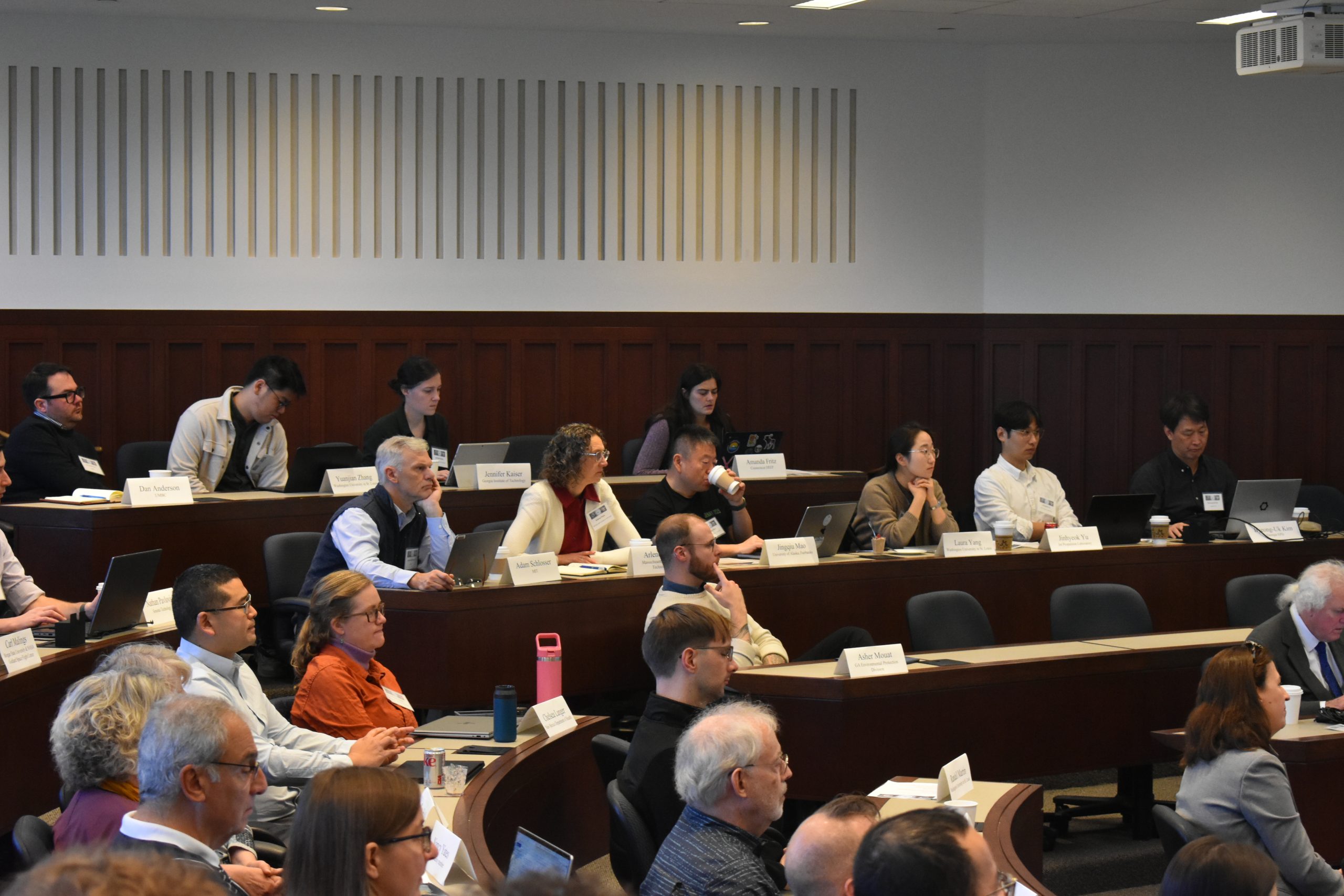
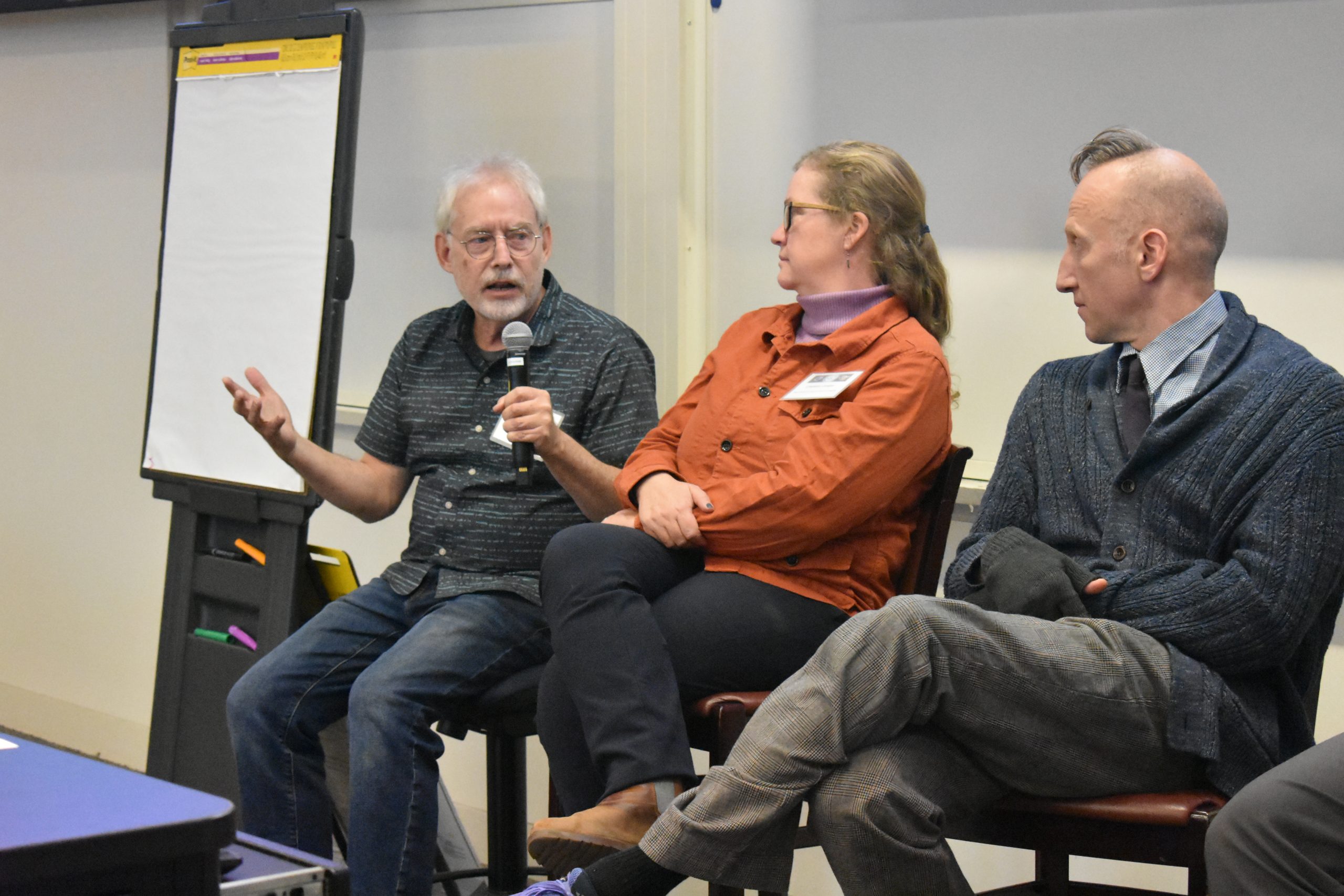
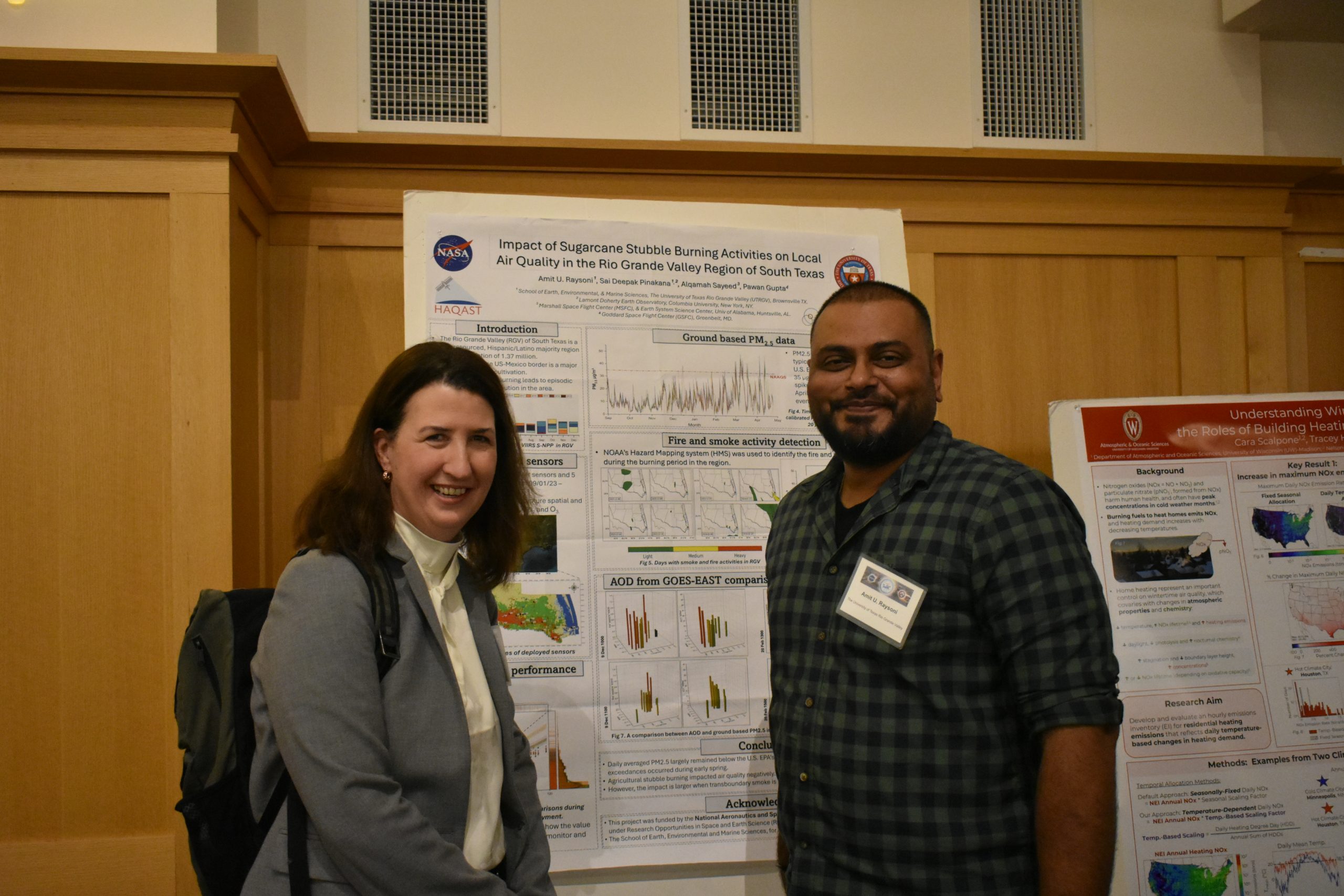
To view the complete collection of photos, click on the button below: