
HAQAST Texas
At the beginning of 2021, NASA expanded the newest version of the Health and Air Quality Applied Sciences team to 14 members composed of air quality and public health scientists across the United States. We’ve started to collaborate with public stakeholders, who help guide our research, and also created new short-term, high-impact projects in small groups called Tiger Teams.
In this public HAQAST meeting, we will rekindle partnerships through two-way dialogue in which stakeholders share their research needs and priorities, and scientists share their resources, insights, and new discoveries.
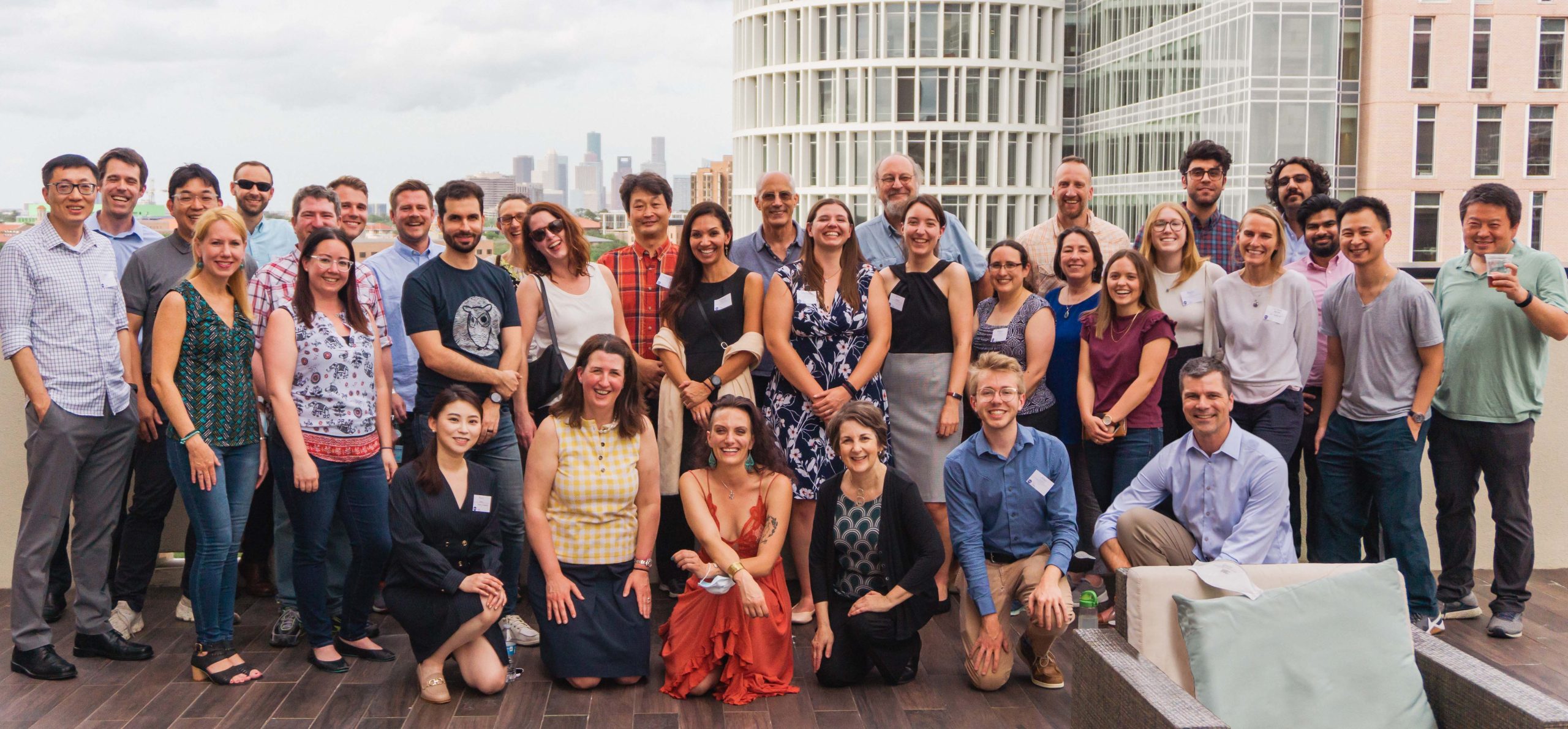
Our meeting took place June 1-2, 2022, at the Hilton Houston Plaza Medical Center, where our local HAQAST member, Qian Xiao of University of Texas Health Science Center at Houston, welcomed us. This workshop aimed to bring HAQAST PIs and stakeholders/members of the public into close discussion.
Thank you to everyone who attended in person and virtually! Each session was recorded and is available below.
June 1st Panels
- Session 1 – Overview of NASA HAQAST
- Session 2A – Characterizing Air Quality in the Gulf Coast Region
- Session 2B – Climate Risks in Health and Air Quality
- Session 3A – Addressing New Challenges with Light at Night Data
- Session 3B – Near Real-Time Data for Air Quality and Health Applications
- Session 4 – In-Person Flash Talks
Wednesday, June 1st
Session 1 – 9:00 AM CST
Overview of NASA HAQAST
Qian Xiao (HAQAST Member and Tiger Team Lead, University of Texas Health Science Center at Houston)
Opening Remarks
John Haynes (Program Manager for Health and Air Quality Applications)
NASA Applied Sciences Perspective: Health and Air Quality
Tracey Holloway (HAQAST Team Leader, University of Wisconsin – Madison)
Updates from the NASA Health and Air Quality Applied Sciences Team
Allison Patton (Health Effects Institute)
Lessons Learned from an HEI Workshop on Health Applications of Satellite-Derived Air Quality Data
Session 2A – 10:45 AM CST
Characterizing Air Quality in the Gulf Coast Region
Moderator: Daniel Goldberg
Doug Boyer (Texas Commission on Environmental Quality)
Coastal Air Quality Research for Regulatory Applications
Holli Ensz (Bureau of Ocean Energy Management) & Ryan Stauffer (NASA)
NASA/BOEM Interagency Partnership to Monitor Oil and Gas Emissions over the Gulf of Mexico
Ted Russell (HAQAST Member, Georgia Institute of Technology)
Impact of Airport, Sea Port and Railyard Emissions on Air Quality, Exposure and Health
Amber Soja (HAQAST Member and Tiger Team Lead, National Institute of Aerospace, NASA LaRC)
Quantifying Burned Areas for Emissions, Air Quality, and Health
Session 2B – 10:45 AM CST
Climate Risks in Health and Air Quality
Moderator: Yang Liu
Arlene Fiore (HAQAST Member, Massachusetts Institute of Technology)
Correlated Summertime Air Pollution and Heat Over the Northeastern USA
Tabassum Insaf (New York State)
Satellite Data Applications Informing Climate and Health Policy
Chris Uejio (HAQAST Member, Florida State University)
What Are Unsafe Indoor Warm Season Temperatures
Ebrahim Eslami (Houston Advanced Research Center)
Climate, Air Quality, and Remote Sensing
Session 3A – 2:00 PM CST
Addressing New Challenges with Light at Night Data
Moderator: Chris Uejio
Qian Xiao (HAQAST Member and Tiger Team Lead, University of Texas Health Science Center at Houston)
Light at Night: A Public Health and Environmental Justice Issue
John Barentine (Dark Sky Consulting)
Dark Skies and Conservation: How and Why We Protect The Night
Christopher Elvidge (Colorado School of Mines)
Overview of Satellite Observed Nighttime Lights
Debbie Moran (Softlight Houston)
Obstacles to Quality Lighting Policy: The Need for Police Education
Session 3B – 2:00 PM CST
Near Real-Time Data for Air Quality and Health Applications
Moderator: Jingqiu Mao
Alqamah Sayeed (Post-Doctoral Researcher, Universities Space Research Association)
Integrating Satellite and Model Data into Decision-Making Systems
Barron Henderson (Environmental Protection Agency)
Updates on HAQAST AirNow Project
Yang Liu (HAQAST Member, Emory University)
Higher Frequency Data Applications
Mary Tran (Department of State)
Data Accessibility and the Future of Greening Diplomacy
Session 4 – 3:30 PM CST
In-Person Flash Talks
Kellen Nyamurungi Namusisi (African Centre for Clean Air)
Closing the Gap with Satellite Data
Gaige Kerr (Research Scientist, George Washington University)
Widening Air Pollution-Related Health Disparities in the United States
Madankui Tao (Graduate Student, Columbia University)
Connecting Ozone-PM2.5-Temperature Correlations with Social Vulnerability
Giovanna (Gia) Henery (Graduate Student, Colorado State University)
Social and Environmental Cues for Uncovering Community Perspectives on AQ
Yun (April) Hang (Post-Doctoral Fellow, Emory University)
Particulate Nitrate Air Pollution Remains a Considerable Health Problem in China
Jed Anderson (CEO, Enviro AI)
Metaverse-Based Air Quality Protection: EnviroAI’s Building of the ‘Environmental Metaverse’
Alqamah Sayeed (Post-Doctoral Researcher, Universities Space Research Association)
Bias Correcting PM2.5 Concentration Obtained from GOES-R – A Deep Learning Approach
Amir Souri (Atmospheric Physicist, Harvard-Smithsonian Center for Astrophysics)
Possibility of Estimation of Ozone Production Rates Using Satellite-Based HCHO and NO2 Observations
Bryan Duncan (HAQAST Member, NASA Goddard Space Flight Center)
A Progress Update for: Integrating NASA Resources into the Standard Operating Procedures of Air Quality Agencies in Low and Moderate Income Countries: A Pilot Study
Deeder Aurongzeb (Dell Technologies)
Dell Sustainability Efforts with Climate and Air Quality
Thursday, June 2nd
Session 5A – 10:00 AM CST
Environmental Justice, Health, and TEMPO
Moderator: Ted Russell
Susan Anenberg (HAQAST Member, George Washington University)
From Space to the Street: Tracking Air Pollution Injustice with Satellite NO2
Tracey Holloway (HAQAST Team Leader, University of Wisconsin—Madison)
Intersections of Environmental Justice, Air Quality and Satellite Data
Leticia Nogueira (American Cancer Society)
Environmental Justice and Cancer
Allan Just (Mount Sinai, TEMPO Early Adopter)
Air Pollution Modeling with Satellite Data for Health
Session 5B – 10:00 AM CST
Wildfire Air Quality and Health Effects
Moderator: Jeff Pierce
Jingqiu Mao (HAQAST Member, University of Alaska, Fairbanks)
Air Quality of Boreal Fires
Daniel Tong (HAQAST Member, George Mason University)
Effects of the 2020 US “Gigafire” on PM2.5 Exceedances and Premature Deaths
Mary Uhl (Western States Air Resources Council)
Western Wildfire Smoke and Air Quality
Michael Geigert (Connecticut Department of Energy and Environmental Protection)
Using Satellite Data for Air Quality Forecasting and Analysis
Session 6A – 11:00 AM CST
Meeting Air Quality Needs with TEMPO
Moderator: Arlene Fiore
Angie Dickens (Lake Michigan Air Directors Consortium)
How Satellite Data is Supporting Ozone Planning in the Great Lakes Region
Daniel Goldberg (HAQAST Investigator and Tiger Team Lead, George Washington University)
Policy and Health Relevant Applications of TROPOMI NO2: Preparing for TEMPO
Randall Martin (HAQAST Member, Washington University)
Advances in the Inference of Ground-Level NO2 from Satellite Observations
Dan Welsh (Colorado Department of Public Health and Environment)
State Perspectives on Satellite Data
Session 6B – 11:00 AM CST
Public Communication on Smoke and Health
Moderator: Amber Soja
Kevin Cromar (HAQAST Investigator and Tiger Team Lead, New York University)
Long-Term Vision for Wildland Fire Research in the U.S.
Cassie Archuleta (City of Fort Collins)
Smoke and Air Quality – City Level Needs and Perspectives
Steve Moran (Director of Business Development, BreezoMeter, Inc.)
The Science Behind BreezoMeter’s Global Air Quality and Pollen Forecast Models
Jeff Pierce (HAQAST Member, Colorado State University)
Prescribed Burning in the Central US: Quantifying Smoke Exposure and Understanding Community Perspectives
Virtual Pre-Recorded Flash Talks
Doyeon Ahn
CO2 Emissions from Global C40 Cities: Self-reported Inventory, Gridded Products, and Satellite Observations
Tara Illgner
Carbon Capture Technologies for Meeting Climate Goals
Jose Ortiz
Advancing the Use of Earth Observation for Air Quality Monitoring in Latin America and the Caribbean
Katelyn O’Dell
Health and Economic Benefits of Air Quality Nowcasting Using a Geostationary Satellite: A Case Study in California in 2020
Elizabeth Joyner
Making Data Access Easier: NASA Data for Your Stakeholder’s HAQ Applications