HAQAST Missouri
The Health and Air Quality Applied Sciences Team (HAQAST) works to connect NASA satellite data and products with public health experts and air quality managers. Our team of 14 PIs and 70+ total collaborating investigators has grown to support and serve hundreds of organizations across the U.S. and around the world. Our public meetings are opportunities to grow these two-way dialogues in which stakeholders share their research needs and priorities, and scientists share their resources, insights, and new discoveries.
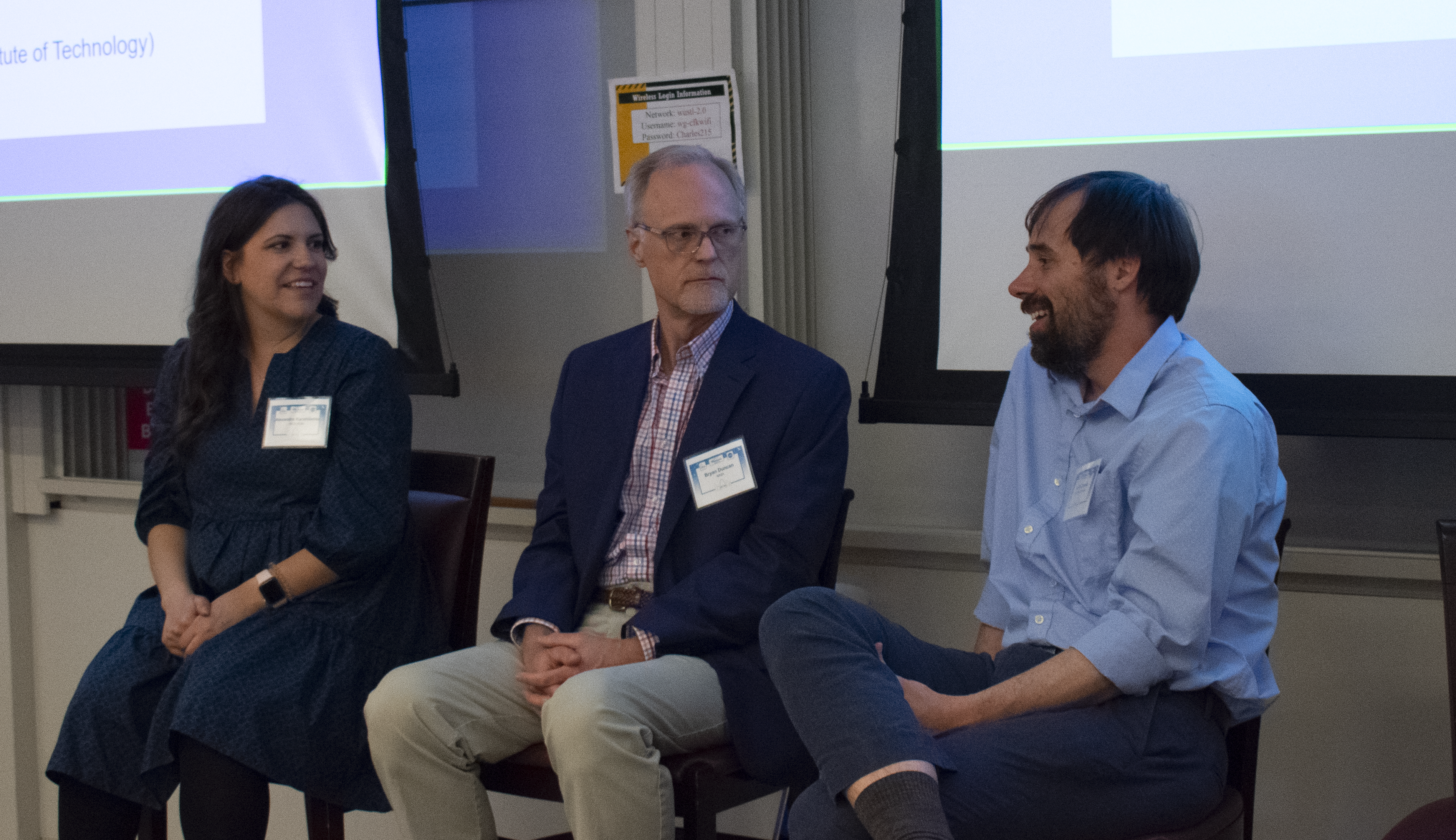
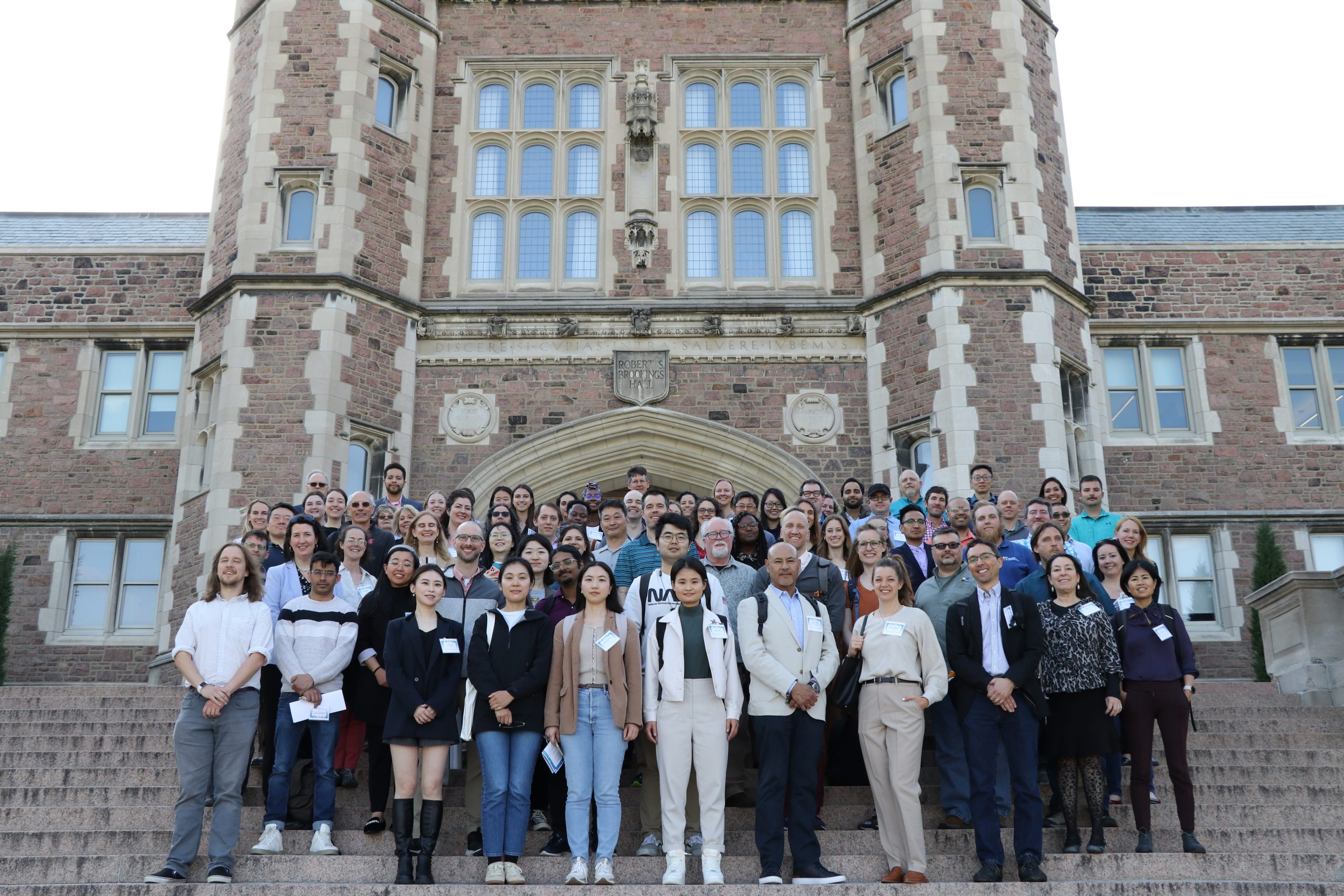
HAQAST Missouri was held in St. Louis, Missouri, April 18-19, 2023 at the Knight Center on the Washington University Campus. In this public meeting we discussed environmental justice, new NASA missions, satellite-derived PM2.5, ground-level ozone, climate change and heat, health impacts of air pollution, and more!
This meeting was an opportunity for sharing updates and new results, networking, and discussion.
April 18th
- Session 1 – Overview of NASA HAQAST
- Session 2A – Satellite Data for Environmental Justice
- Session 2B – Improving Wildfire Smoke Forecasts and Hindcasts
- Session 3A – Broadening the Use of NASA Resources
- Session 3B – Health Impact Assessment for Prescribed Fires and Air Pollution
- Session 4A – Discussion on TEMPO Applications for Surface Ozone and Health
- Session 4B – Discussion on Advances and Insights from Satellite-Derived PM2.5
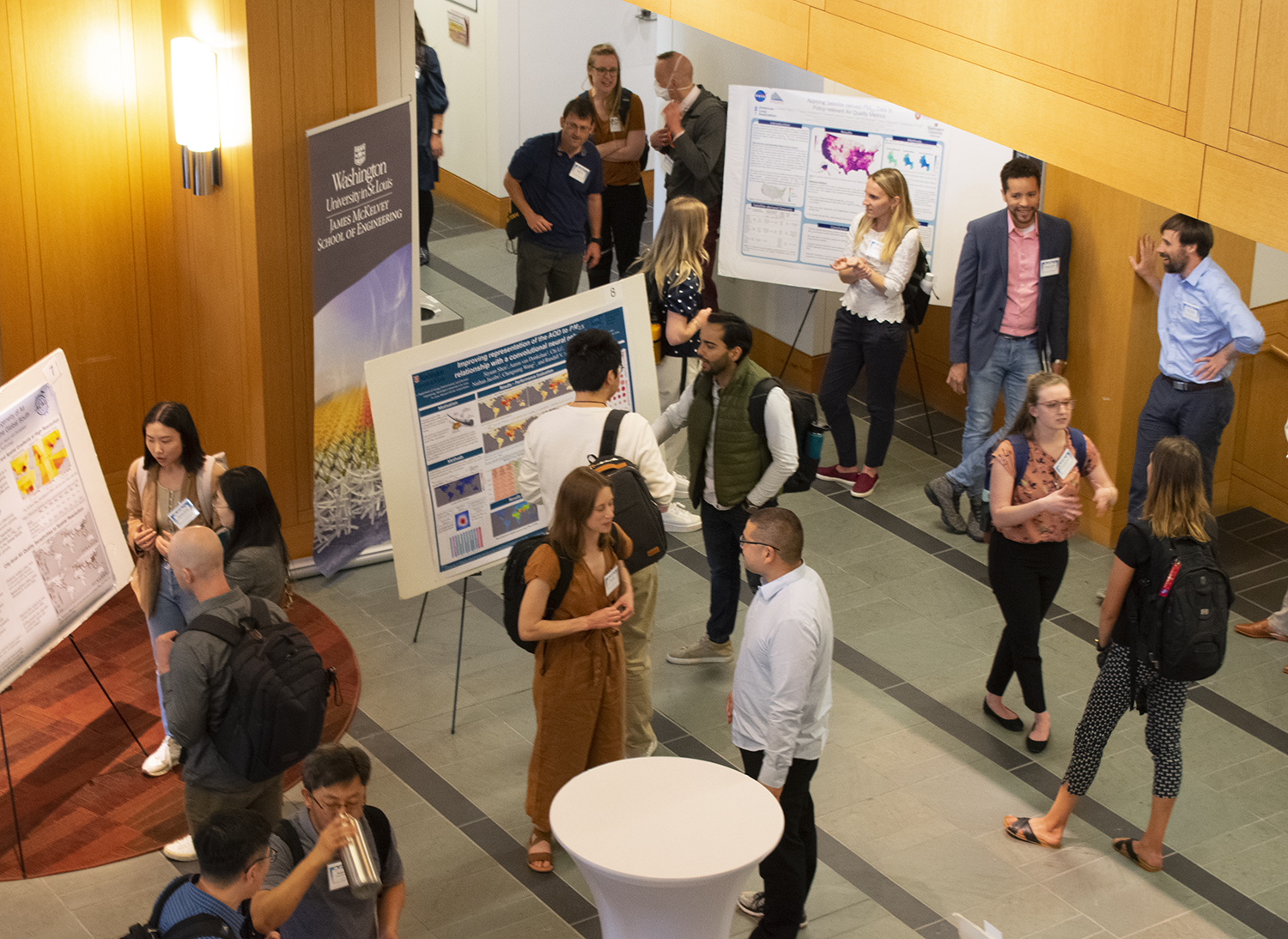
- Poster Session
April 19th
- Session 5A – Satellite Data to Support Emission Control Strategies
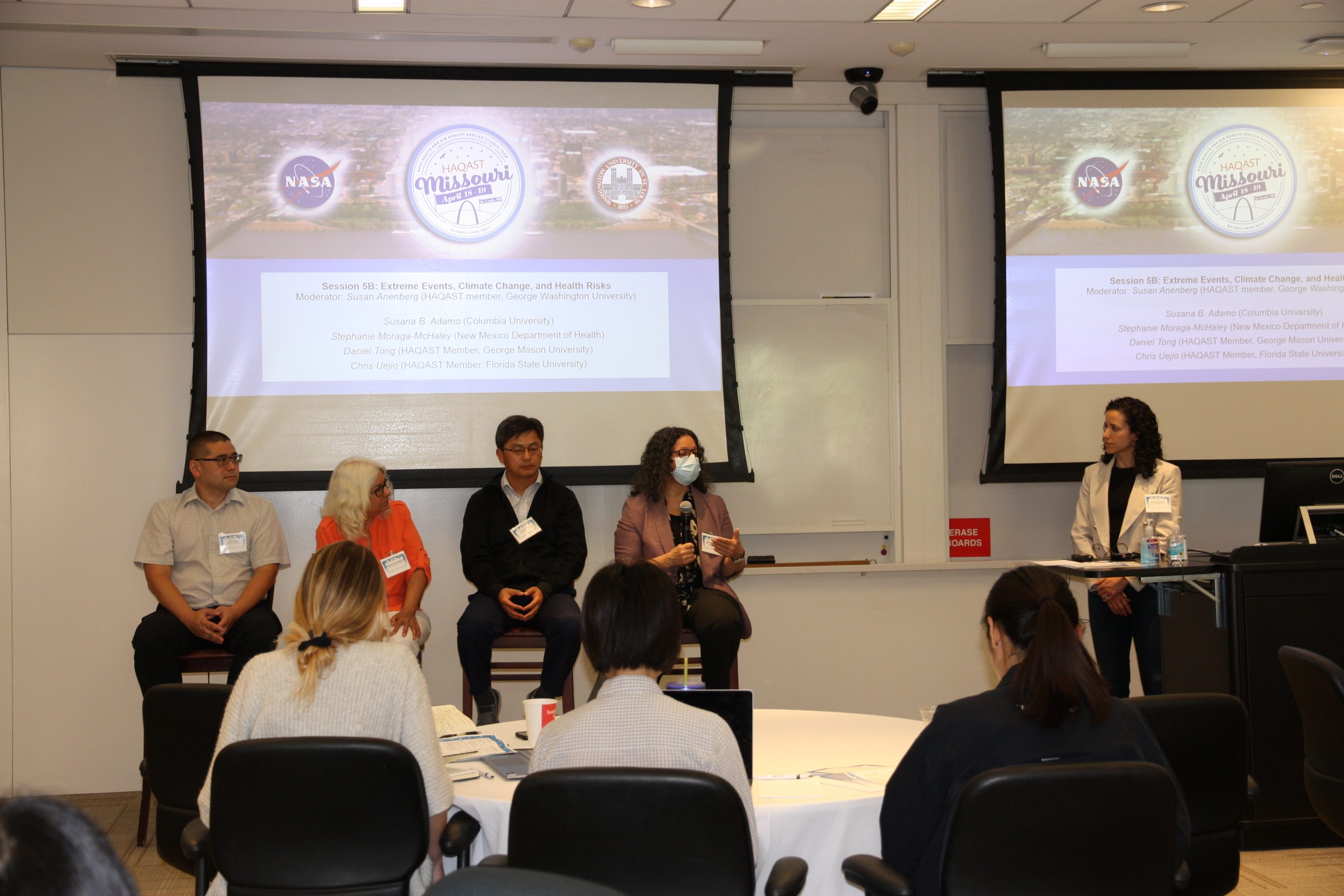
- Session 5B – Extreme Events, Climate Change, and Health Risks
- Session 6A – Potential Applications for Future Satellite Missions for Public Health
- Session 6B – Trends in Light and Air Pollution: Implications for Oil, Gas, and Beyond
- Virtual Flash Talks
Session 1A
Overview of NASA HAQAST
Randall Martin (Washington University in St. Louis)
Opening Remarks
Mary McKay (Vice Provost, Washington University in St. Louis)
Here and Next
Tracey Holloway (HAQAST Team Leader, University of Wisconsin—Madison)
Overview of NASA HAQAST
John Haynes (Program Manager for NASA Health and Air Quality Applications)
Explore Earth
Session 2A
Satellite Data for Environmental Justice
Moderator: Qian Xiao (HAQAST Tiger Team lead, University of Texas Health Science Center at Houston)
Tess Carter (George Washington University)
PM2.5 Data inputs alter identification of disadvantaged communities
Tracey Holloway (HAQAST Team Lead, University of Wisconsin—Madison)
Environmental Justice, Air Quality and Satellite Data
Libby Mohr (Environmental Defense Fund)
Satellite data for environmental justice
Ufuoma Ovienmhada (Massachusetts Institute of Technology)
Sattilite Data for Environmental Justice: A Scoping Review
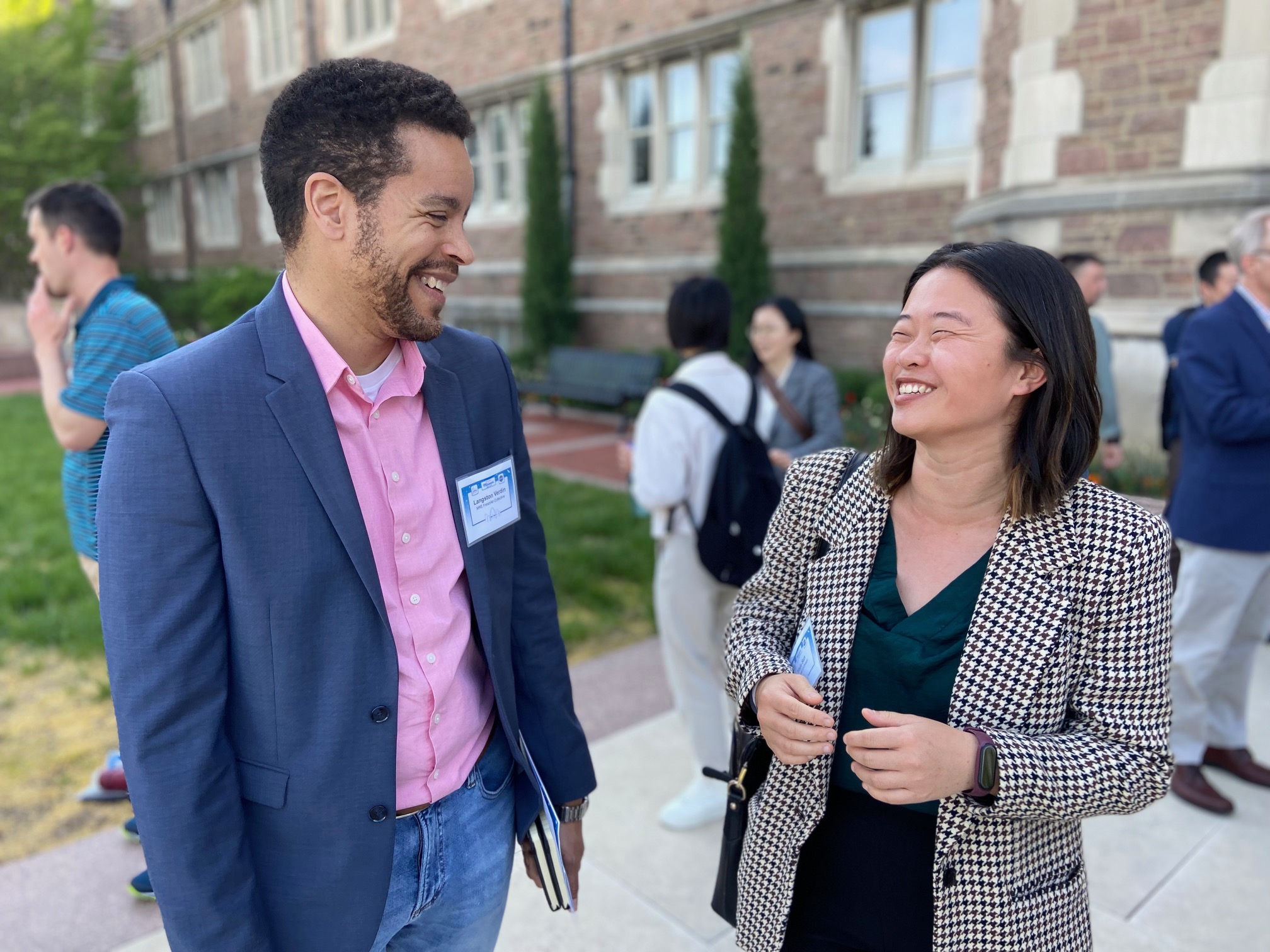
Langston Verdin (MKE FreshAir Collective)
Satellite Data for Environmental Justice: Lessons learned over 3 years of monitoring air quality in Milwaukee, WI.
Session 2B
Improving Wildfire Smoke Forecasts and Hindcasts
Moderator: Yang Liu (HAQAST Member, Emory University)
Alberto Ayala (Sacramento Air Quality Management District)
Satellite Observations and Assessment of Wildfire Smoke Impacts and Other Air Quality Management Priorities
Katie Broyles (Colorado Public Health)
Satellite Data for Practical Smoke Forecasts
Jeff Pierce (HAQAST member, Colorado State University)
Combining satellites and ground monitorsfor health, economic, and regulatorystakeholder needs
Jessie Zhang (University of Iowa)
Improving air quality forecast during boreal wildfire season
Session 3A
Broadening the Use of NASA Resources
Moderator: Tracey Holloway (HAQAST Team Leader, University of Wisconsin—Madison)
Bryan Duncan (HAQAST Member, NASA Goddard Space Flight Center)
Integrating NASA Resources into the StandardOperating Procedures of Low-Moderate IncomeCountries (LMIC)
Kevin Cromar (HAQAST Tiger Team Lead, New York University)
Modeling the Impacts of Local and Regional Emission Sectorson Ground-Level Ozone Formation In and Downwind of NewYork City During LISTOS 2018
Kellen Namusisi (African Centre for Clean Air)
Integrating Satellite and Low-Cost Sensor Data to Strengthen Air Quality Management in Uganda and Africa
Jingqiu Mao (HAQAST Member, University of Alaska, Fairbanks)
Global evaluation of HCHO diurnal variationusing Pandonia Global Network (PGN)
Alex Karambelas (HAQAST Ambassador, NESCAUM)
Modeling the Impacts of Local and Regional Emission Sectors on Ground-Level Ozone Formation In and Downwind of New York During LISTOS 2018
Session 3B
Health Impact Assessment for Prescribed Fires and Air Pollution
Moderator: Daniel Tong (HAQAST Member, George Mason University)
Carissa Hoium (Children’s Health Alliance of Wisconsin), Erika Kluetmeier (Wisconsin Department of Health)
The Power of Partnerships: Improving Milwaukee School-Neighborhood Air Quality and Kids’ Health
Bonne Ford (Colorado State University)
Health Impact Assessments (HIA) for Landscape Fires
Amber Soja (HAQAST Tiger Team Lead, National Institute of Aerospace, NASA Langley Research Center)
Science behind the Analysis: Enhancing Data and Emissions for Air Quality
Byeong-Uk Kim (HAQAST Ambassador, Georgia Environmental Protection Division)
Prescribed Fires and PM2.5 in Georgia
Session 4A
Discussion on TEMPO Applications for Surface Ozone and Health
Moderator: Joel Dreessen (Maryland Department of the Environment)
Aaron Naeger (NASA)
Tropospheric Emissions:Monitoring of Pollution(TEMPO) Mission
Arlene Fiore (HAQAST Member, Massachusetts Institute of Technology)
Anticipating TEMPO: applications for ground-level ozone and public health
Session 4B
Discussion on Advances and Insights from Satellite-Derived PM2.5
Moderator: Chris Tessum (University of Illinois at Urbana-Champaign)
Randall Martin (HAQAST Member, Washington University in St. Louis)
Advances and Insights from Satellite-Derived Fine Particulate Matter (PM 2.5)
Susan Anenberg (HAQAST Tiger Team Lead, George Washington University)
Advances and insights from satellite-derived PM2.5: Novel applications to protect public health globally and locally
Session 5A
Satellite Data to Support Emission Control Strategies
Annie Anderson (Sonoma Technology)
Connecting Research to Communities using Ground and Satellite Data
Benjamin de Foy (Saint Louis University)
NO2 and methane emissions from urban areas around the world estimated using TROPOMI
Brad Pierce (University of Wisconsin—Madison)
Satellite Data to Support Emission Control Strategies
Lars Lone / Leif Paulson (Wyoming Department of Environmental Quality)
Wyoming DEQ Overview
Session 5B
Extreme Events, Climate Change, and Health Risks
Moderator: Susan Anenburg (HAQAST member, George Washington University)
Susana B. Adamo (Columbia University)
Heat trends and socioeconomic vulnerabilities in New York
Stephanie Moraga-McHaley (New Mexico Department of Health)
Extreme Events, Climate Change, and Health Risks:New Mexico’s Experience
Daniel Tong (HAQAST Member, George Mason University)
Windblown Dust Events and Highway Safety in the US
Chris Uejio (HAQAST Member, Florida State University)
A satellite-based investigation ofurban air temperature patternsduring extreme heat conditions
Session 6A
Potential Applications for Future Satellite Missions for Public Health
Moderator: Bryan Duncan (HAQAST Member, NASA Goddard Space Flight Center)
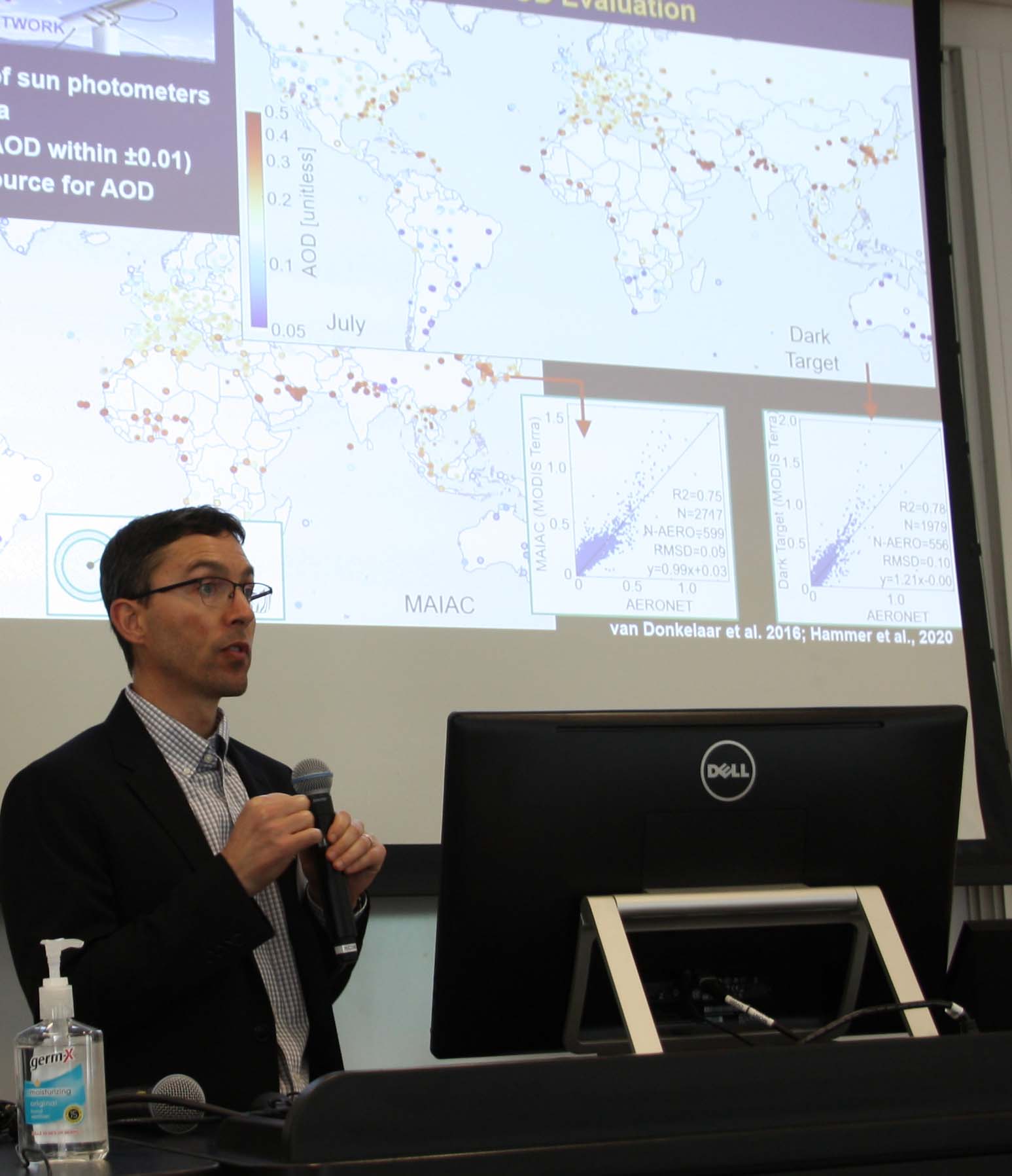
Robert Levy (NASA Goddard Space Flight Center)
Adding high temporal resolution to the globallong-term aerosol data record: A synergy ofLEO and GEO
Yang Liu (HAQAST Member, Emory University)
MAIA Status Update
Leticia Nogueira (HAQAST Ambassador, American Cancer Society)
Is it Satelliable?
Andrew Sayer (University of Maryland, Baltimore County and NASA Goddard Space Flight Center)
PACE’s place among our satelliteaerosol remote sensing records
Session 6B
Trends in Light and Air Pollution: Implications for Oil, Gas, and Beyond
Moderator: Jeff Pierce (HAQAST member, Colorado State University)
Doug Boyer (HAQAST Ambassador, Texas Commission on Environmental Quality)
Oil and Gas Remote Sensing
Christopher D. Elvidge (Colorado School of Mines)
VIIRS Studies of Natural Gas Flaring
Ted Russell (HAQAST Member, Georgia Institute of Technology)
New Opportunities for Earth Systems Observations and Modeling: HEI Field Studies of UOGD Impacts and ASCENT
Qian Xiao (HAQAST Tiger Team Lead, University of Texas Health Science Center at Houston)
Spatiotemporal patterns of Artificial Light at Night: Demographic and Socioeconomic Correlates
Virtual Flash Talks
Wei-Ting Hung (NOAA/George Mason University)
Development and Evaluation of a Machine Learning Based Wildfire Spread Prediction Model for Regional Air Quality Forecasting
Min Huang (NASA Goddard Space Flight Center)
Process Level Analysis and Impact Assessment of Ozone and Other Chemical Constituents Using NASA Satellites and Models
Yunyao Li (George Mason University)
The Real-Time North America Hazardous Air Quality Ensemble System (HAQES)
Ryan Stauffer (NASA Goddard Space Flight Center)
SCOAPE-II: A Spring 2024 Campaign to Monitor Emissions near Gulf of Mexico Oil and Gas Operations
Posters
Deepangsu Chatterjee (Washington University in St. Louis)
Regional Source Contributions to Fine Particulate Matter and Attributable Mortality in South Asia
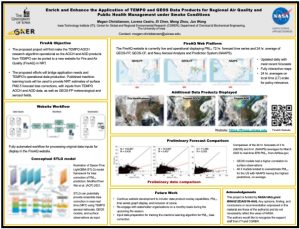
Megan Christiansen (University of Iowa)
Enrich and Enhance the Application of TEMPO and GEOS Data Products for Regional Air Quality and Public Health Management under Smoke Conditions
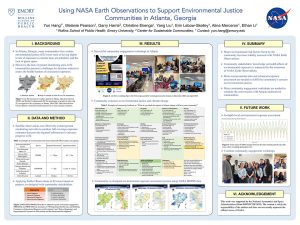
Yun Hang (Emory University)
Using NASA Earth Observations to Support Environmental Justice Communities in Atlanta, Georgia
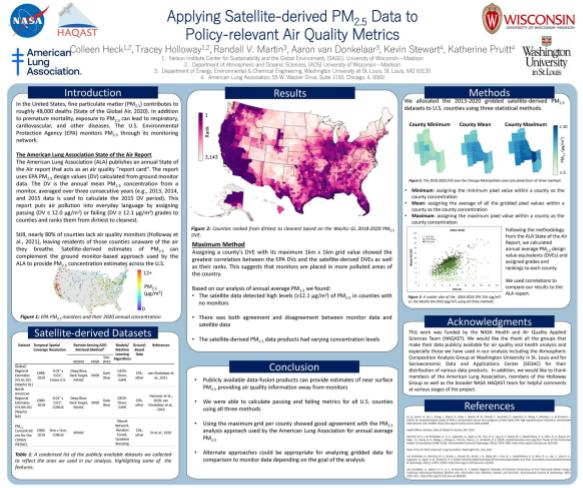
Colleen Heck (University of Wisconsin—Madison)
Applying Satellite-derived PM2.5 Data to Policy-relevant Air Quality Metrics
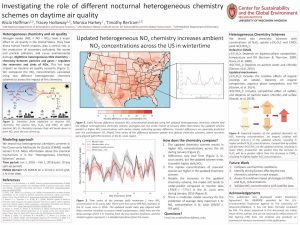
Alicia Hoffman (University of Wisconsin–Madison)
Investigating the Role of Different Nocturnal Heterogeneous Chemistry Model Schemes on Daytime Air Quality
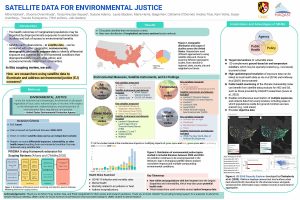
Mitra Kashani (Centers for Disease Control and Prevention) and Tanya Kreutzer-Sayyed (University of Maryland Baltimore County)
Satellite Data for Environmental Justice: A Scoping Review
Meryl Kruskopf (NASA SERVIR, University of Alabama Huntsville)
Breathing Easy: How SERVIR Applies Research to Address Air Quality Challenges in Data Scarce Regions
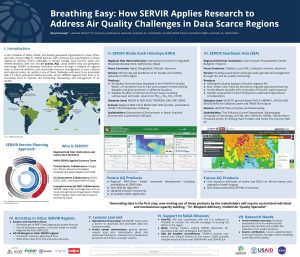
HAQASTMO_Kruskopf_poster
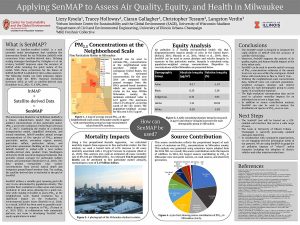
Lizzy Kysela (University of Wisconsin—Madison)
Applying SenMAP to Assess Air Quality, Equity, and Health in Milwaukee
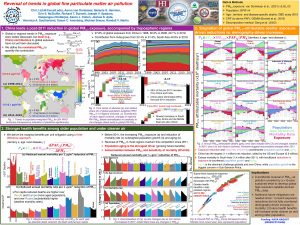
Chi Li (Washington University in St. Louis)
Reversal of Trends in Global Fine Particulate Matter Air Pollution
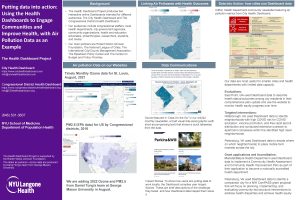
Yuruo Li (City Health Dashboard)
Putting Data to Action: Use the City Health Dashboard to Engage Communities and Improve Health
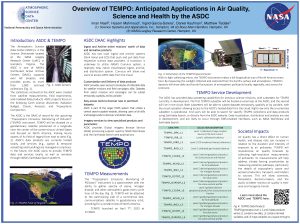
Hazem Mahmoud (NASA Langley)
Overview of TEMPO: Anticipated Applications in Air Quality, Science, and Health by the ASDC
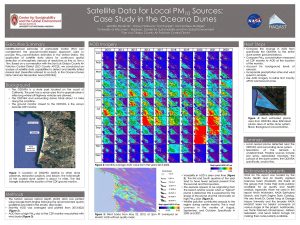
Jennifer McGinnis (University of Wisconsin—Madison)
Satellite Data for Local PM10 Sources: A Case Study of the Oceano Dunes
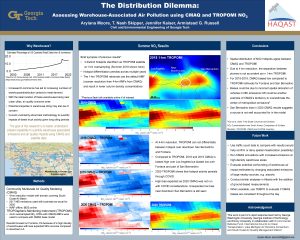
Aryiana Moore (Georgia Institute of Technology)
Distribution Dilemma: Assessing Warehouse-Associated Air Pollution using CMAQ and TROPOMI NO2
Andrew Sayer (University of Maryland, Baltimore County and NASA Goddard Space Flight Center)
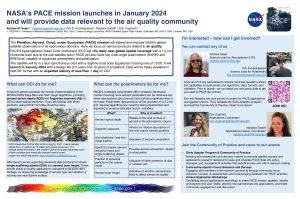
NASA’s PACE Mission Launches in January 2024 and Will Provide Data Relevant to the Air Quality Community
Ben Sonpon (Missouri University of Science & Technology)
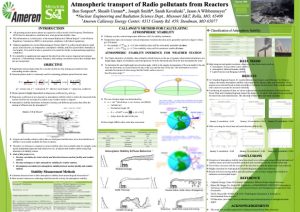
Atmospheric Transport of Radio Pollutants from Reactors
Siyuan Shen (Washington University in St. Louis)
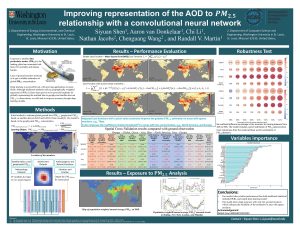
Improving the Representation of the AOD to PM2.5 Relationship with a Convolutional Neural Network
Dandan Zhang (Washington University in St. Louis)
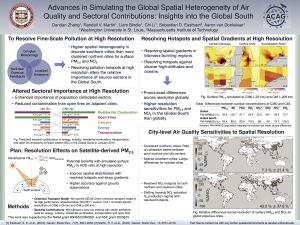
Advances in Simulating the Global Spatial Heterogeneity of Air Quality and Sectoral Contributions: Insights into the Global South
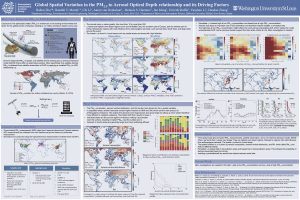
Haihui Zhu (Washington University in St. Louis)
Global Spatial Variation in the PM2.5 to AOD relationship and its Driving Factors
Photos