
HAQAST Madison
The Health and Air Quality Applied Sciences Team (HAQAST) works to connect NASA satellite data and products with public and private sector organizations for air quality, environmental health, and emissions applications. Our team of 14 PIs and 70+ total collaborating investigators has grown to support and serve hundreds of organizations across the U.S. and around the world. Our public meetings are opportunities to grow these two-way dialogues in which stakeholders share their research needs and priorities, and scientists share their resources, insights, and new discoveries.
This meeting was held May 13-14, 2026 at the Pyle Center in Madison, Wisconsin and virtually. For the first time, HAQAST collaborated with the Outrider Foundation Science Media Forum to connect leading journalists with NASA capabilities.
Session 1: Overview of NASA HAQAST
Update from NASA Health and Air Quality Applications
John Haynes (NASA HQ)
The Health and Air Quality Applied Sciences Team Overview
Tracey Holloway (HAQAST Team Leader, University of Wisconsin–Madison)
Session 2A: Tracking air pollution under smoke and dust with satellite data
Moderator: Amber Soja (NASA Langley, HAQAST Member)
Xi Chen (Univ. Iowa, HAQAST Member)
Effects of the Elk Fire on Sheridan, WY
Leif Paulson (Wyoming DEQ)
Tracking and Analyzing Smoke Plumes Using Satellite Data
Amanda Fritz (Connecticut DEEP)
Improving Smoke and Dust PM2.5 Analysis using Lidar Observations
Travis Toth (NASA Langley, HAQAST Member)
Session 2B: Evaluating emissions and anthropogenic activities
Moderator: Aaron Naeger (NASA, HAQAST Member)
Evaluating Emissions and Anthropogenic Activities
Tracey Holloway (UW Madison, HAQAST Member)
Evaluating Emissions using Satellite Data: LADCO Needs
Angie Dickens (LADCO)
Ozone Sensitivity Modeling with CMAQ: Evaluating Model Performance Using TEMPOv4 NO2
Jennifer Kaiser (Georgia Tech, HAQAST Member)
Sarah Benish (National Atmospheric Deposition Program)
Session 3A: Managing urban heat and health responses
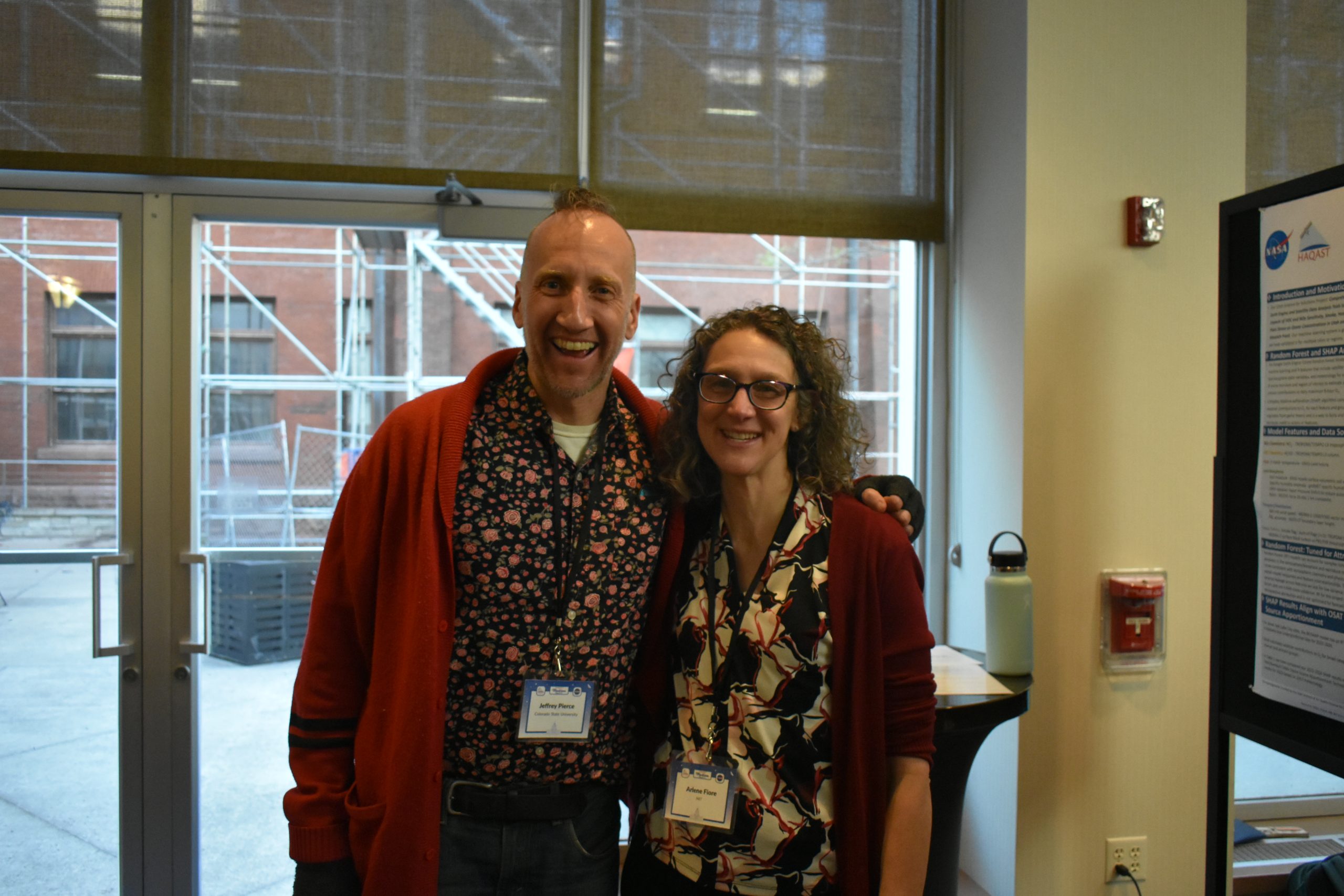
Moderator: Jeff Pierce (Colorado State University, HAQAST Member)
Chris Uejio (Florida State Univ., HAQAST Member)
Urban Heat, Green Space, Air Pollution, and Alzheimer’s Disease & Related Dementias (ADRD) in Texas
Yun Hang (University of Texas Health Science Center at Houston)
Wisconsin Department of Health Services: Heat and Health Projects
Megan Christenson and Kate Beardmore (Wisconsin DHS)
Managing Urban Heat Through Data, Policy Innovation, and Community Resilience
Robert Phocas (Southeast Sustainability Directors Network)
Session 3B: Improving access, analysis, and awareness of satellite data for air quality and health
Moderator: Carl Malings (Morgan State Univ., HAQAST Member)
Addressing Barriers to Awareness, Access and Analysis of Satellite Data for Air Quality and Health
Jenny Bratburd (UW Madison, HAQAST co-I)
Physics- and Chemistry-Informed Deep Learning to Advance Satellite-Derived PM2.5 Data
Randall Martin (Washington University in St. Louis, HAQAST Member)
Sarah Kroening (Children’s Health Alliance of Wisconsin)
Kevin Crowe (Washington Post)
Session 4A: Integrating low-cost sensors and satellite data in air quality decision-making
Moderator: Pawan Gupta (NASA Goddard, HAQAST Member)
Combining Low-cost Sensors and Satellite Data to Understand Smoke and Dust Exposure in Rural Regions
Jeff Pierce (Colorado State Univ., HAQAST Member)
Air Quality Nowcasting and Forecasting in Alaska Using Low-Cost Sensors and Satellites
Jingqiu Mao (Univ. of Alaska, HAQAST Member)
Driving Pollution Salience with Powered Forecasts & Social Media
Vishal Joseph (Univ. of Chicago)
Measures from Space, Solutions on the Ground
Leticia Nogueira (American Cancer Society)
Session 4B: Data for impact, what scientists can learn from journalists and communications officers
Moderator: Randall Martin (Washington University in St. Louis, HAQAST Member)
Inside the Current Media Landscape: Selling Highly-Technical Science Stories to Editors
Virgina Gewin (Freelance journalist)
The Art of Pitching: Finding the Human Element Behind the Data
Rachel Ramirez (Freelance journalist)
Joan Meiners (Arizona Republic)
The Challenge of Wonk: Making Data Matter for Everyone Else
Rebecca Theim (The Pew Charitable Trusts)
Session 5A: Using satellite data for operational air quality decisions
Moderator: Jingqiu Mao (Univ. of Alaska, HAQAST Member)
Satellite Data in Air Quality Operations – New Capabilities, Challenges, & Opportunities
Carl Malings (Morgan State Univ., HAQAST Member)
Satellite Data for Operational Air Quality Decisions
Samuel Kay (District of Columbia, Department of Energy & Environment)
Bridging the Gap: Complementing Satellite-Derived Air Quality Data with Open-Source Ground Data
Minh Nghiem (OpenAQ)
HAQAST Public Meeting Using Satellite Data for Operational Air Quality Decisions
Nico Schulte (South Coast AQMD)
Session 5B: Meeting the challenge of satellite data continuity
Moderator: Travis Toth (NASA Langley, HAQAST Member)
Meeting the Challenge of Satellite Data Continuity
Amber Soja (NASA Langley, HAQAST Member)
Kazuyuki Miyazaki (NASA JPL)
Contrasting the TEMPO and TROPOMI Views of Tropospheric NO2
Dan Goldberg (George Washington Univ.)
More Than an Image: Bridging Five Decades of Satellite Continuity with McIDAS-V
Bob Carp (UW–Madison)
Session 6A: How are machine learning and AI changing the work of satellite-data in decision-making on air quality and environmental health?
Moderator: Xi Chen (Univ. Iowa, HAQAST Member)
Bryan Duncan (NASA Goddard, HAQAST Co-I)
Building an Observation-to-Observation Regional Air Quality Model
Elise Penn (ZeusAI)
AI/ML in Air Quality and Environmental Health
Nathan Pavlovic (Spheros Environmental)
Air Quality Data & Application Development – AI/ML Approach
Pawan Gupta (NASA Goddard, HAQAST Member)
Session 6B: Characterizing ozone production regimes with satellite data
Moderator: Jennifer Kaiser (Georgia Tech, HAQAST Member)
New Space-Based Windows into Ozone-Forming Chemistry
Arlene Fiore (MIT, HAQAST Member)
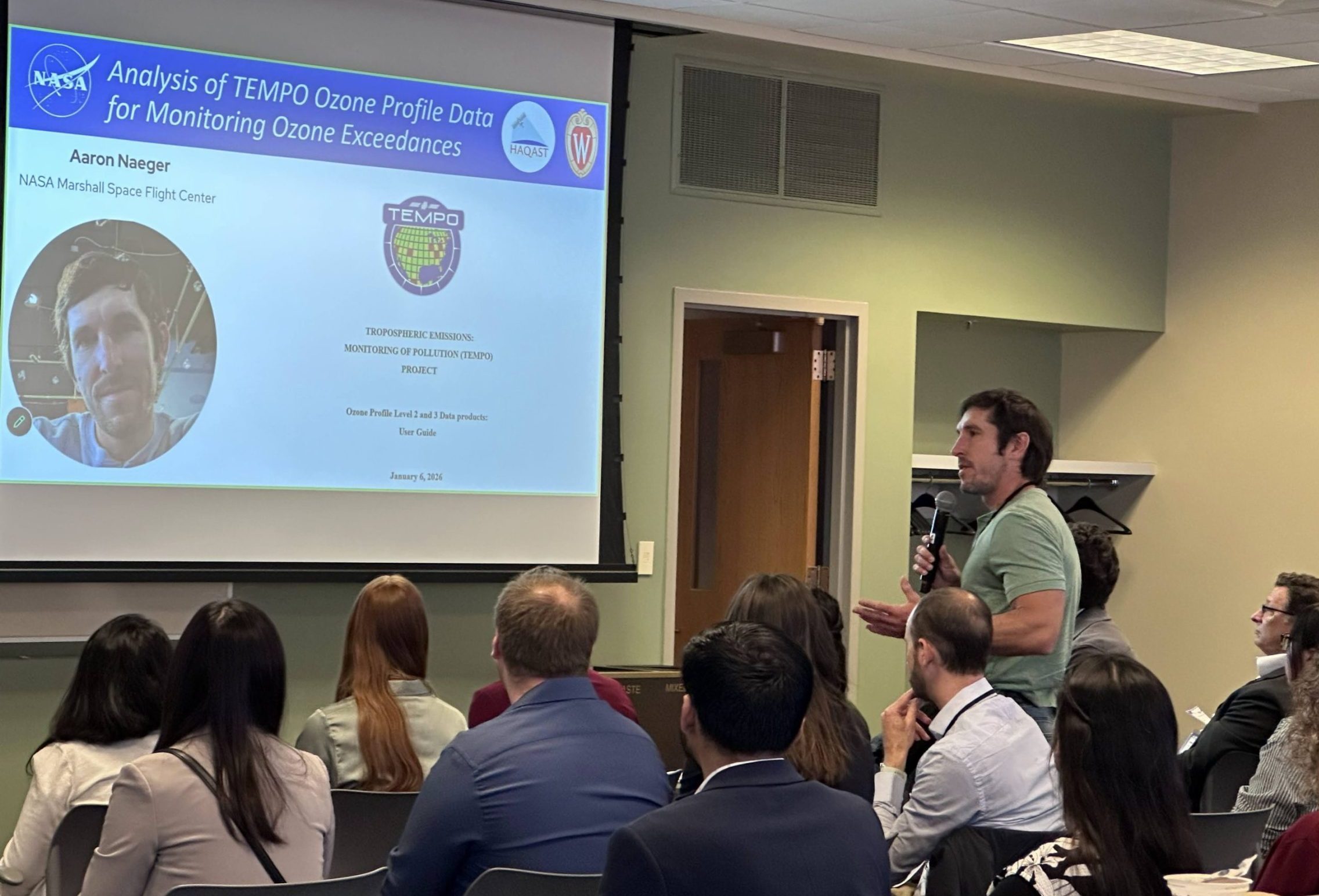
Characterizing Ozone Production Regimes with TEMPO Data
Aaron Naeger (NASA, HAQAST Member)
Characteristics of Ozone in the Metro Atlanta Area
Xiangyu Jiang (Georgia EPD)
Kelly Crawford (Bay Area Air Quality Management District)
Outrider Sessions
Science and Media Resources for Journalists, Featuring Two Interactive NASA Tools
Hazem Mahmoud (NASA ASDC ADNET)
Covering the Uncovered: NASA Stories Journalists Need to Know About in 2026
Christopher Uejio (Florida State University)
Jonathan Martin (UW–Madison)
Steve Ackerman (UW–Madison)
Arlene Fiore (MIT)
Randall V. Martin (Washington University in St. Louis)
Legacies Revisited: Updates on Historic Environmental Successes
Tracey Holloway (UW–Madison)
Michael Hawthorne (Chicago Tribune)
Sarah Benish (UW–Madison)
Brad Pierce (UW–Madison)
To view the complete collection of Outrider talks, click on the button below:
Virtual Flash Talks
Kristen Okorn (NASA Ames Research Center)
Ozone Where We Live (OWWL): A community science project addressing ozone issues in the San Joaquin Valley
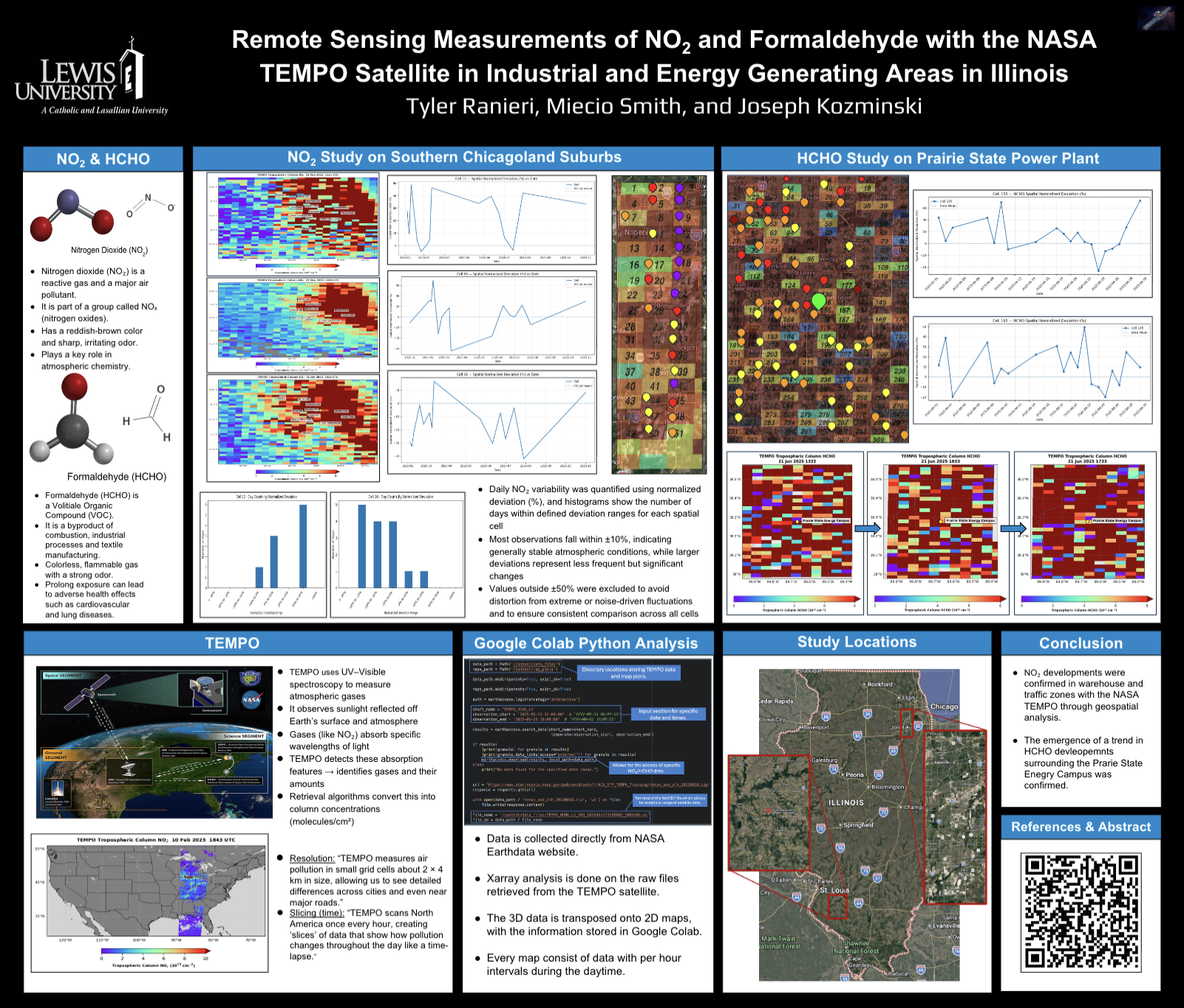
Tyler Ranieri & Miecio Smith (Lewis University)
Remote Sensing Measurements of Nitrogen Dioxide and Formaldehyde with the NASA TEMPO on Industrial Developments
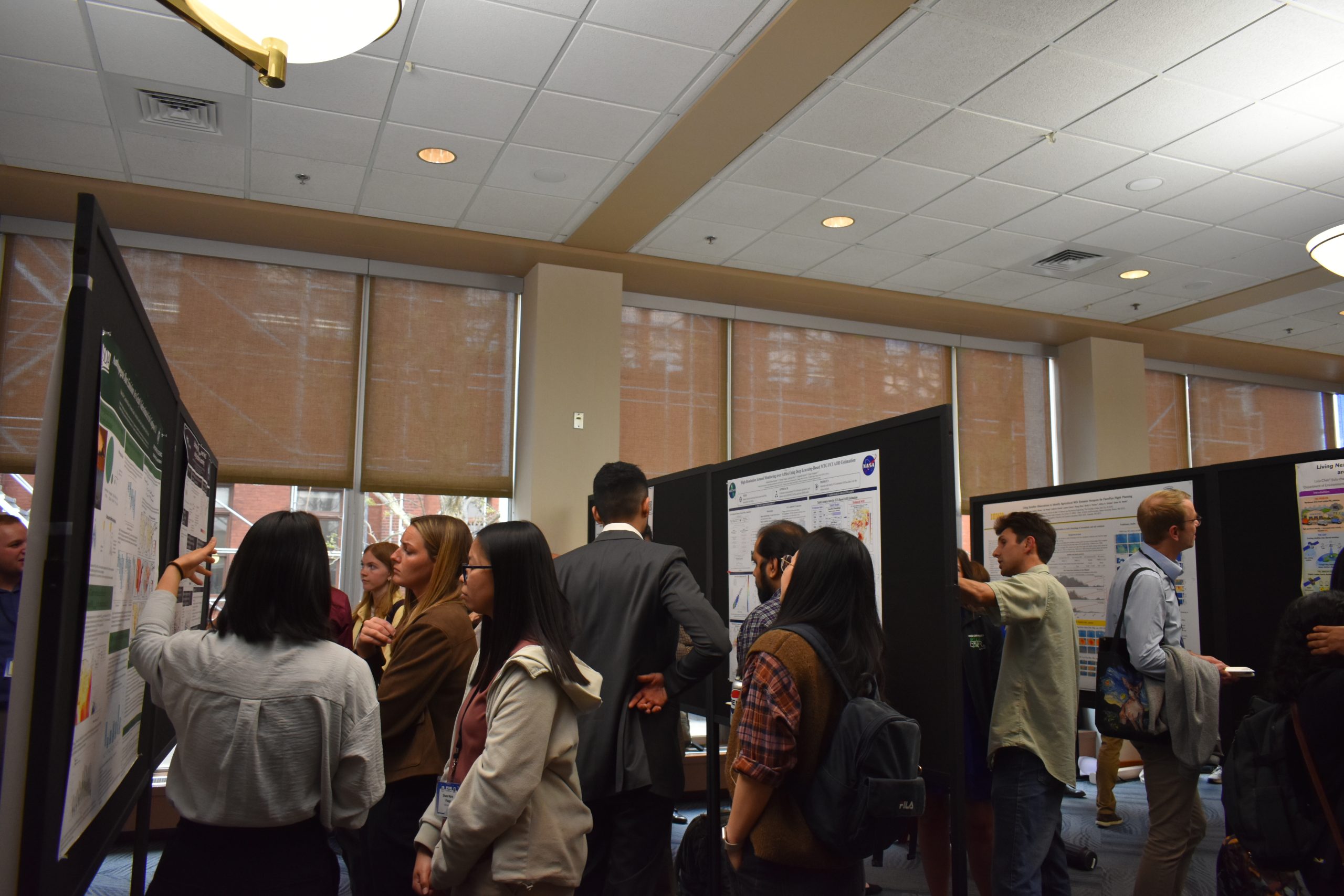
Posters
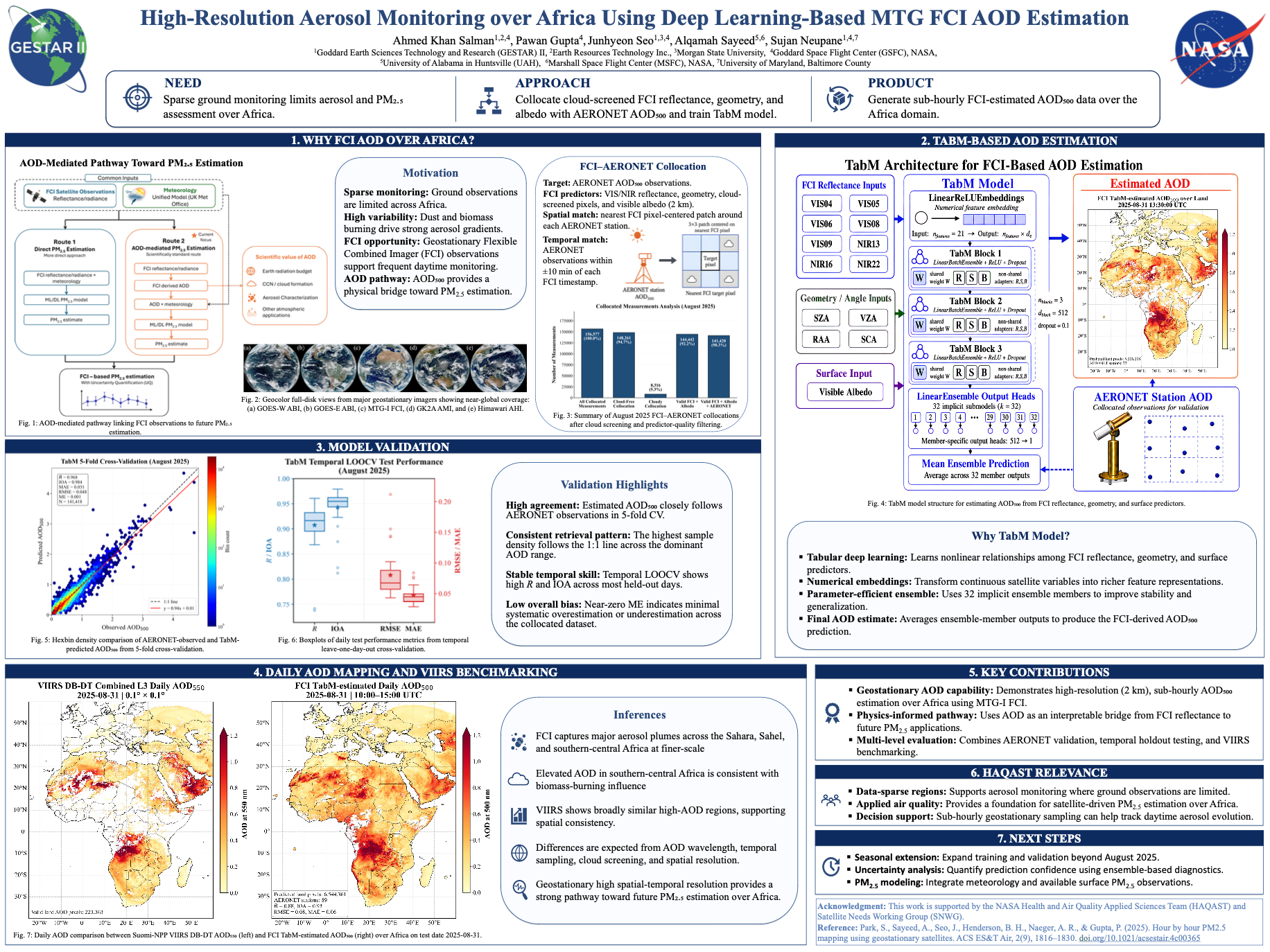
Ahmed Salman (GESTAR-II ERT / NASA GSFC)
High-Resolution Aerosol Monitoring over Africa Using Deep Learning-Based MTG FCI AOD Estimation
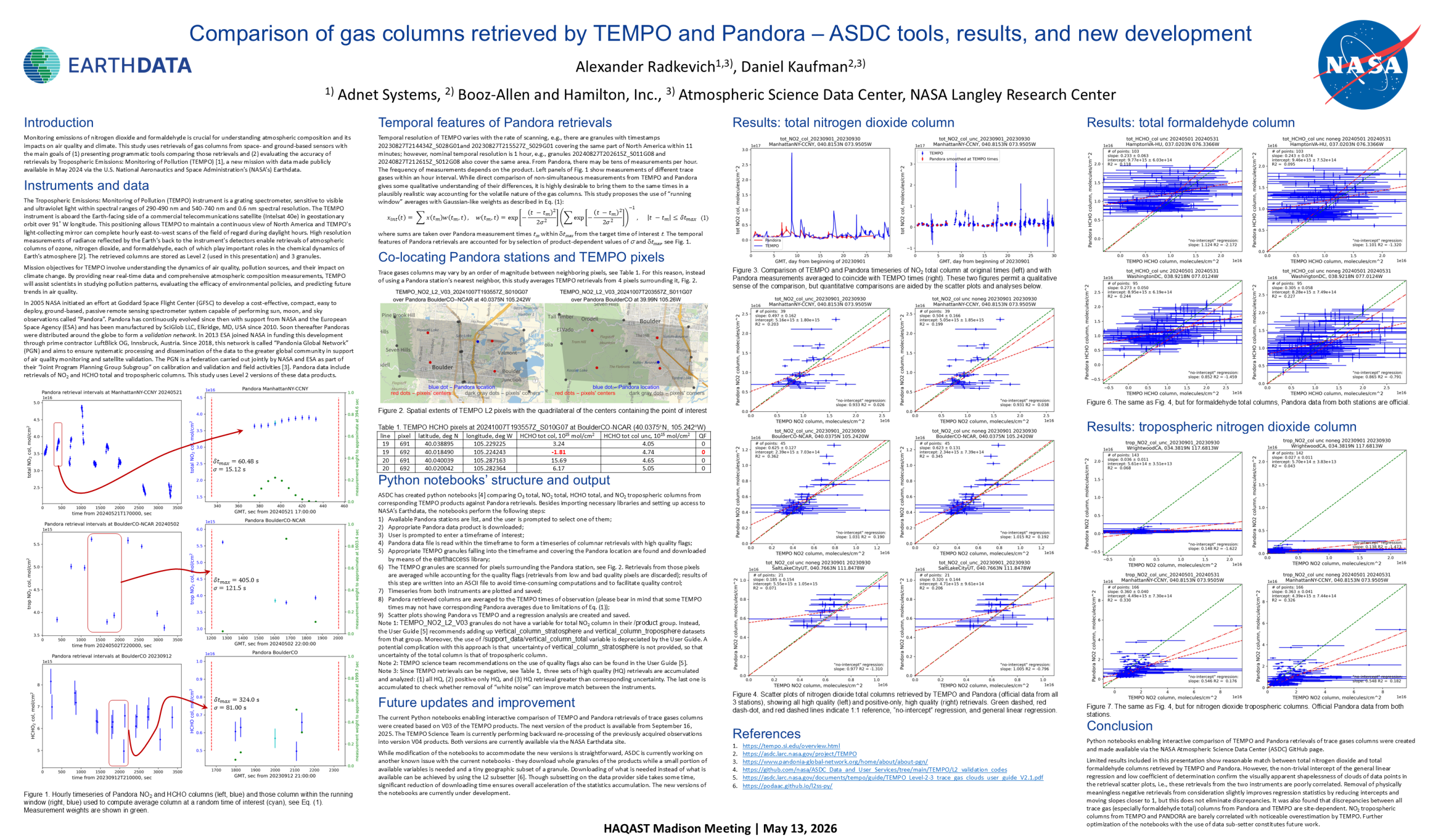
Alexander Radkevich (ASDC, NASA LaRC; ADNET Inc.)
Comparison of gas columns retrieved by TEMPO and Pandora – ASDC tools, results, and new development
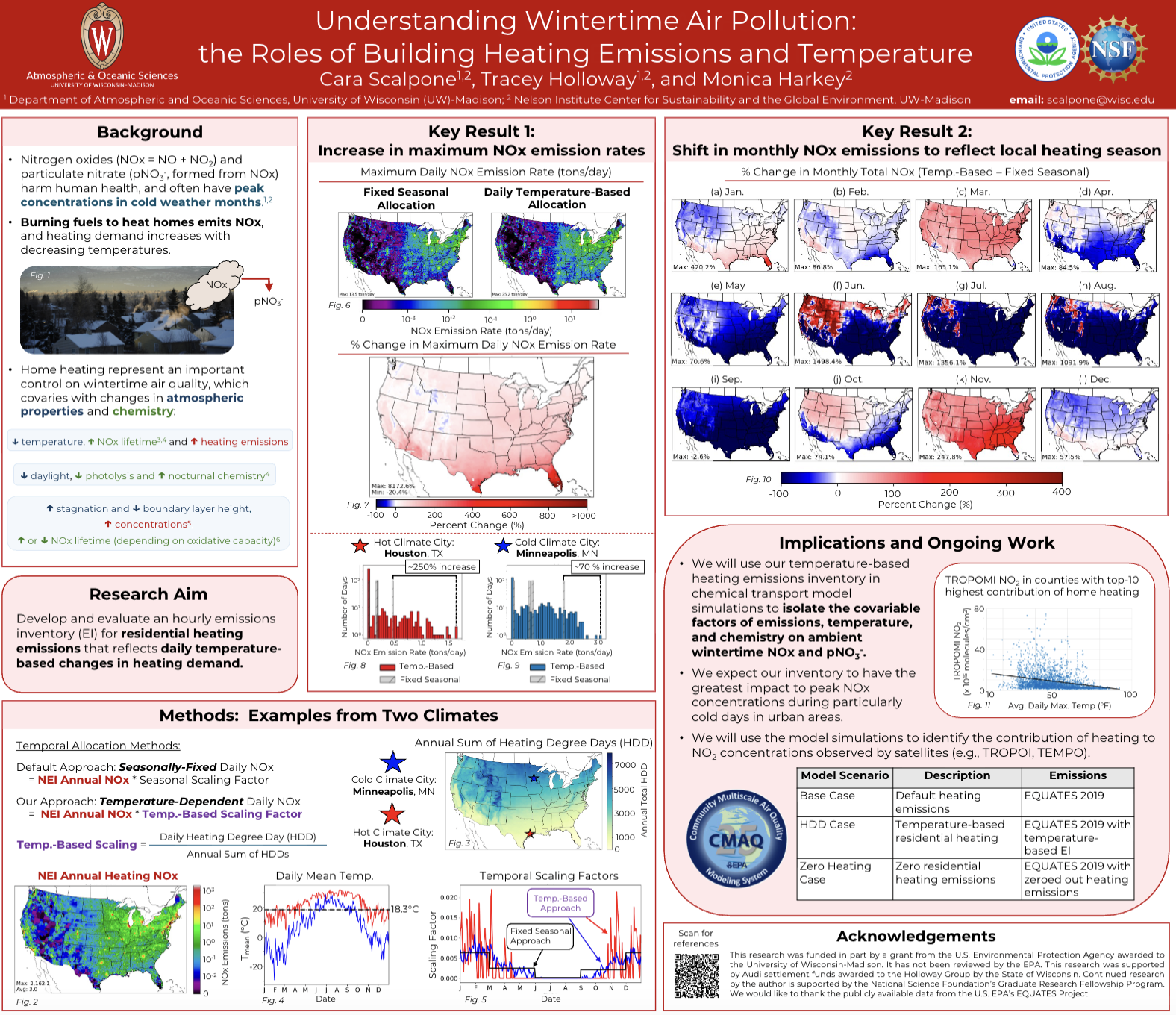
Cara Scalpone (University of Wisconsin–Madison)
Understanding Wintertime Air Pollution: the Roles of Building Heating Emissions and Temperature
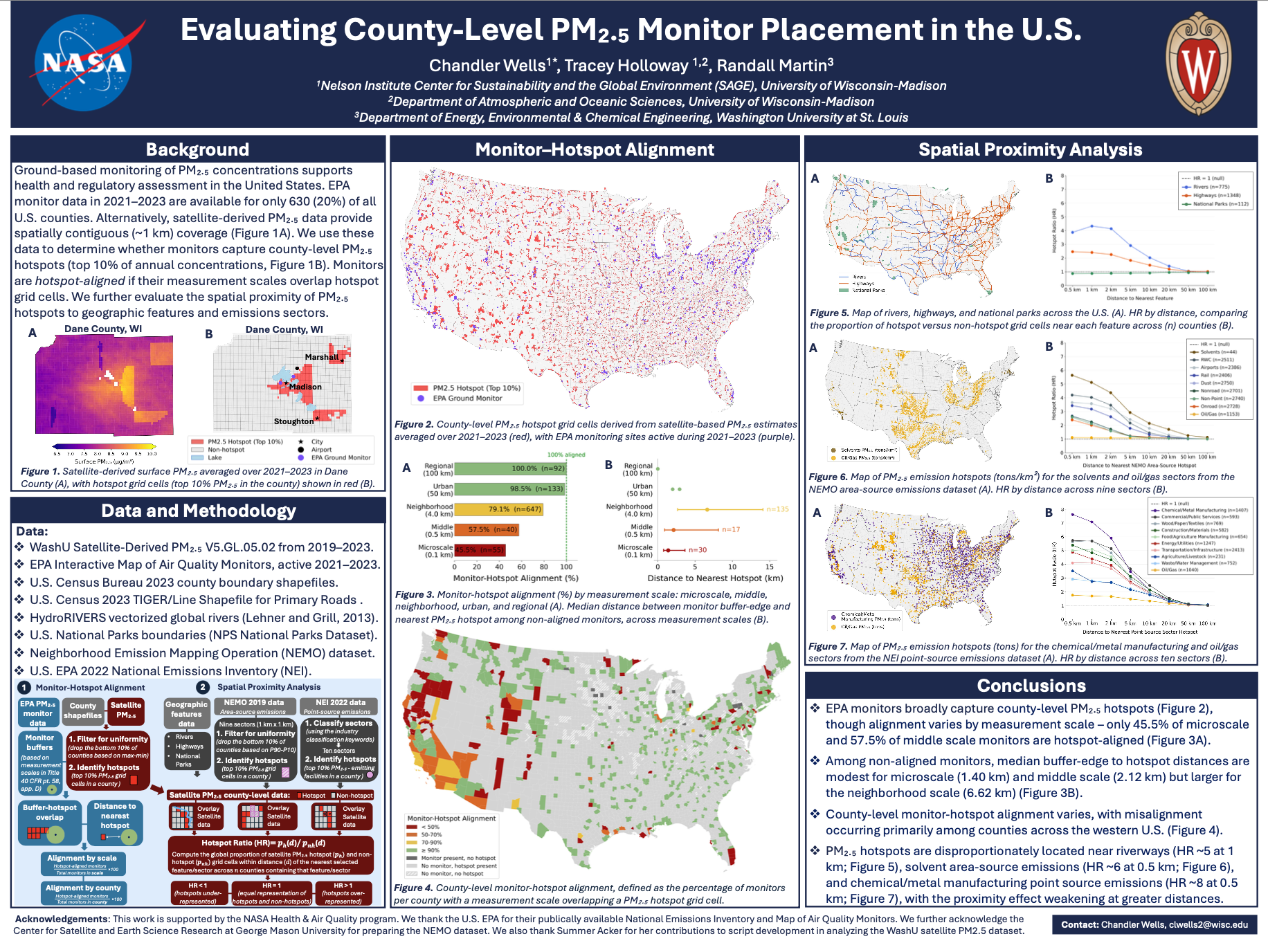
Chandler Wells (University of Wisconsin–Madison)
Evaluating County-Level PM₂.₅ Monitor Placement in the U.S.
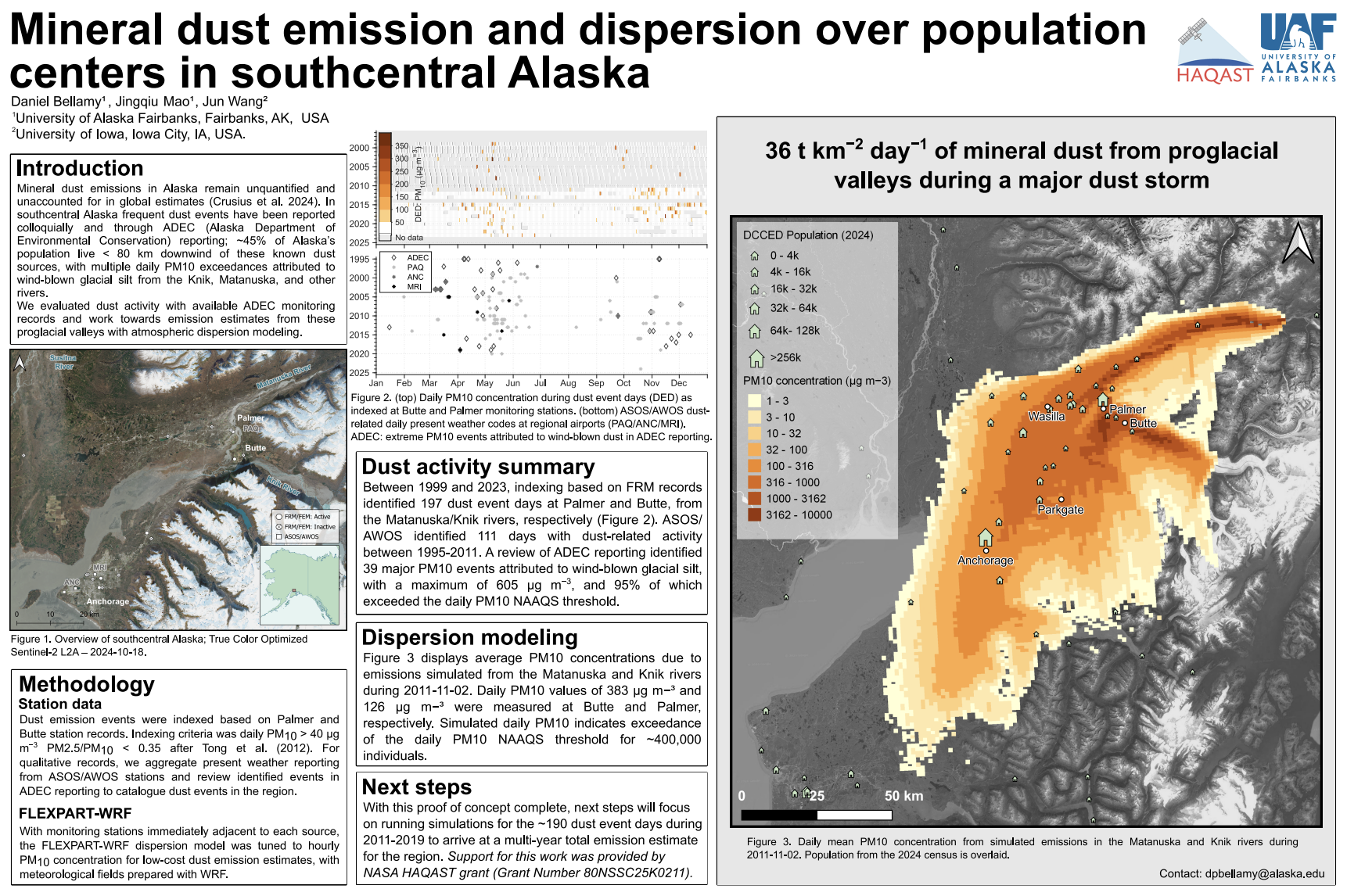
Daniel Bellamy (University of Alaska Fairbanks)
Mineral dust emission and dispersion over population centers in southcentral Alaska
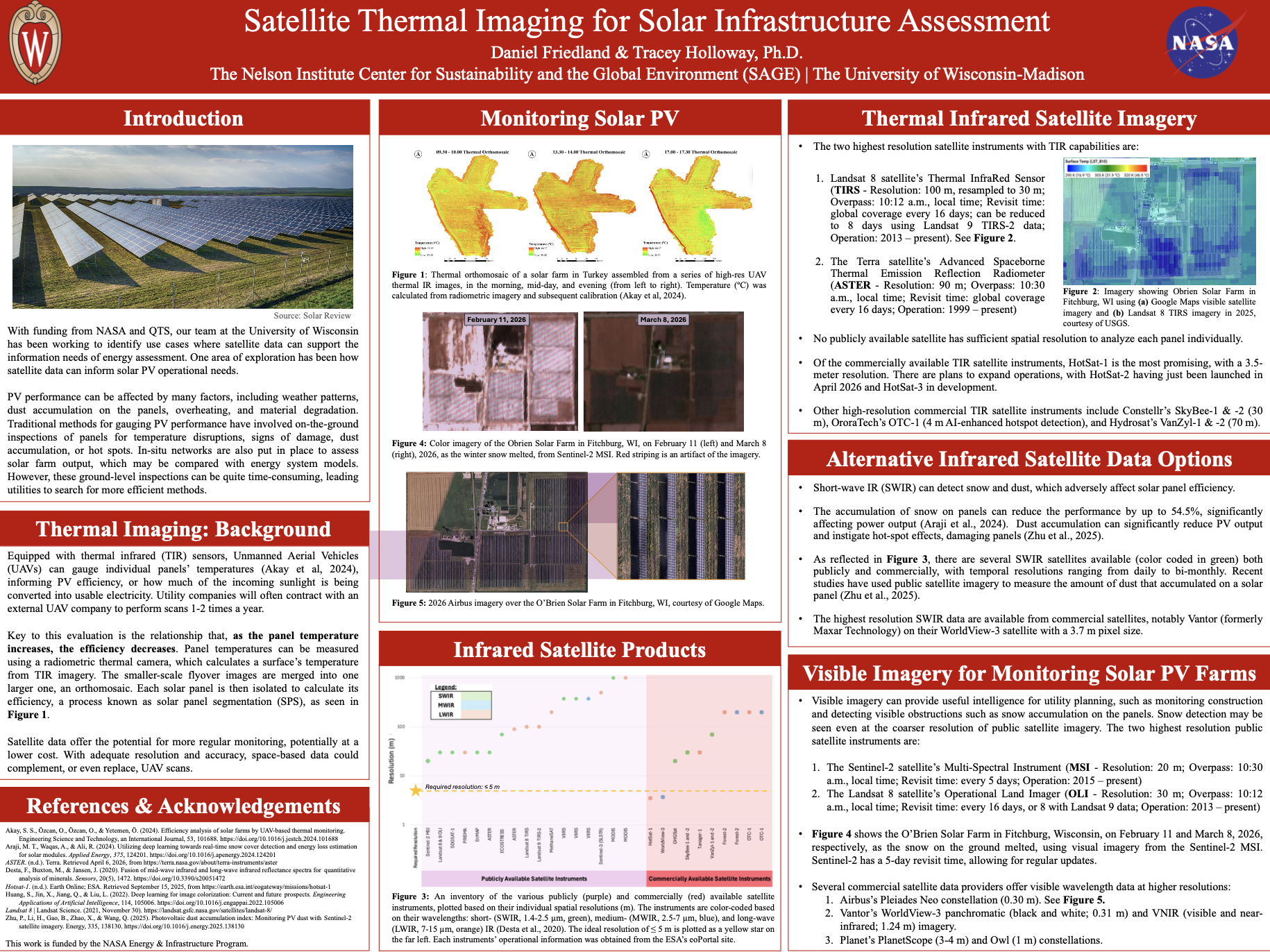
Daniel Friedland (University of Wisconsin–Madison)
Satellite Thermal Imaging for Solar Infrastructure Assessment
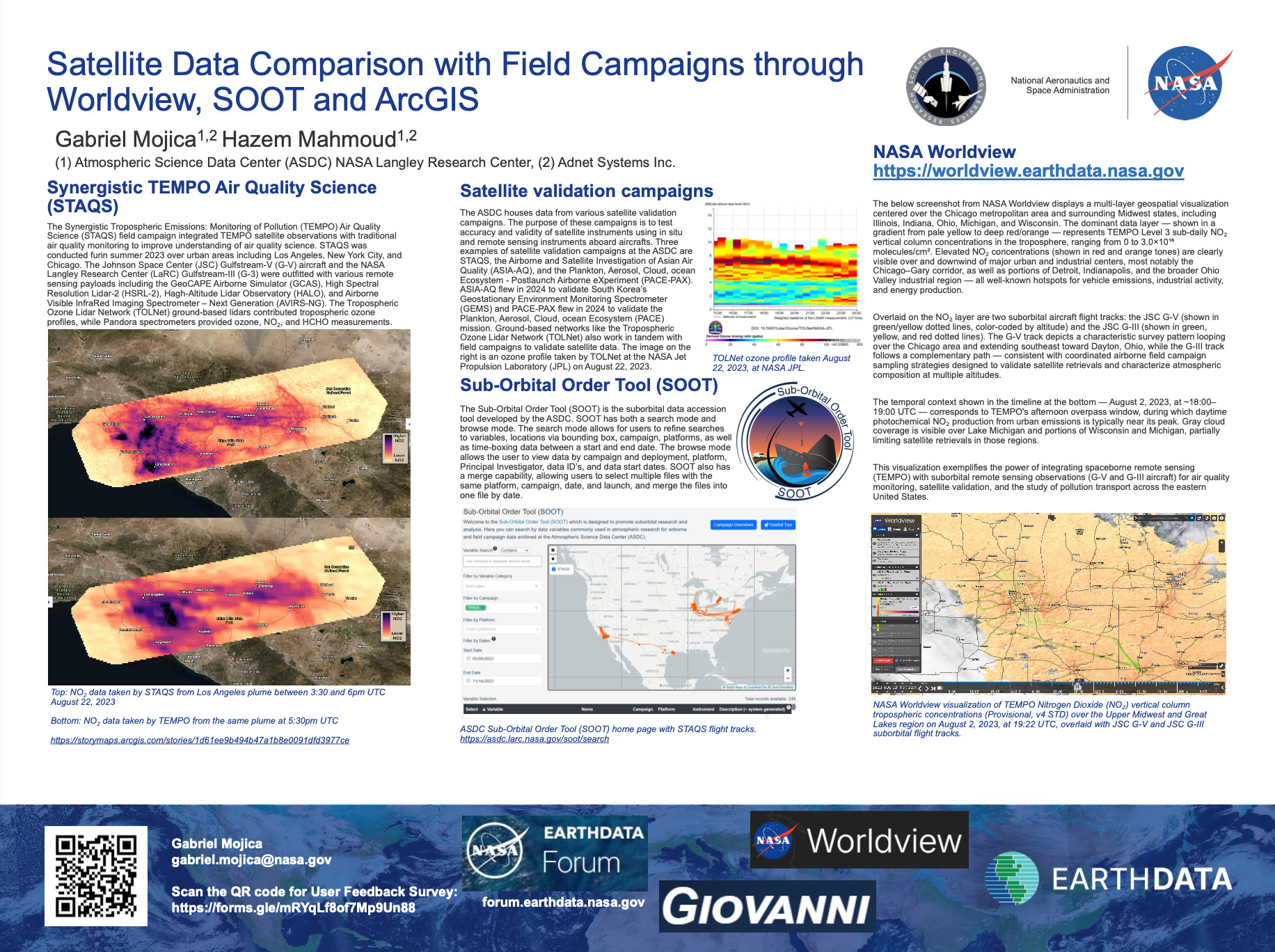
Gabriel Mojica (NASA Langley Research Center ASDC)
Satellite Data Comparison with Field Campaigns through Worldview, SOOT and ArcGIS
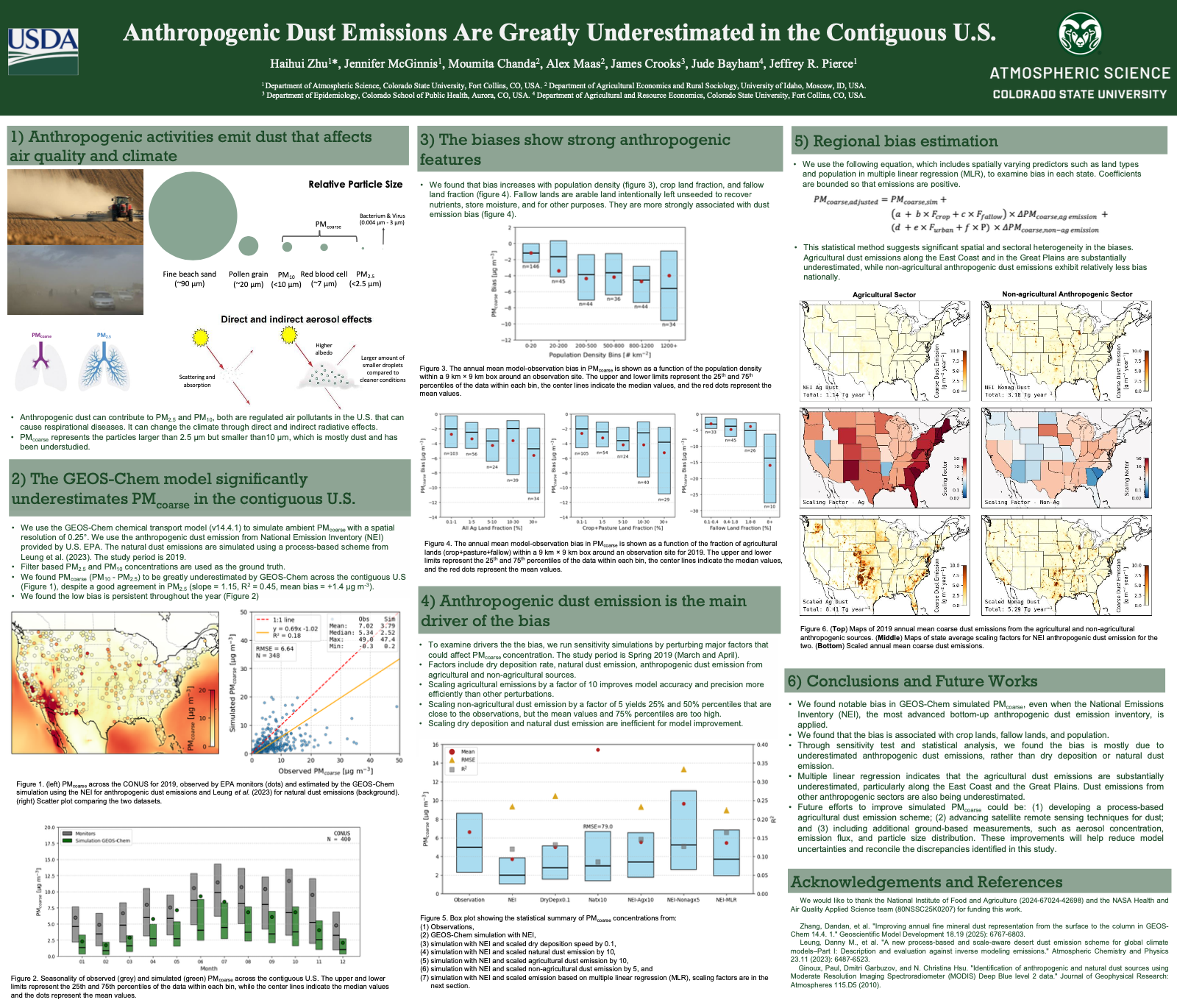
Haihui Zhu (Colorado State University)
Anthropogenic Dust Emissions Are Greatly Underestimated in the Contiguous U.S.
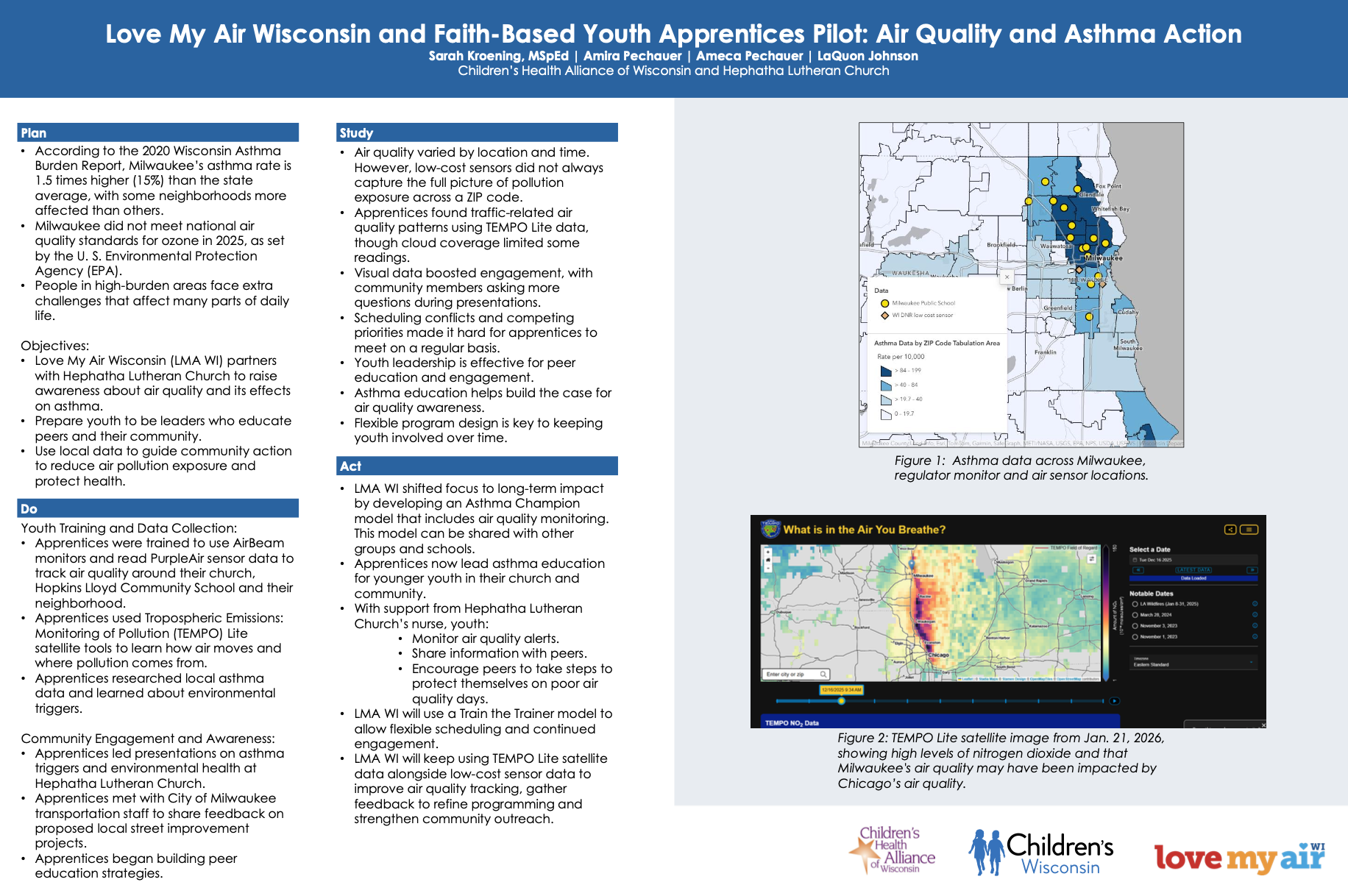
Hephatha Lutheran Church Youth Apprentices (Hephatha Lutheran Church)
Love My Air Wisconsin and Faith-Based Youth Apprentices Pilot: Air Quality and Asthma Action
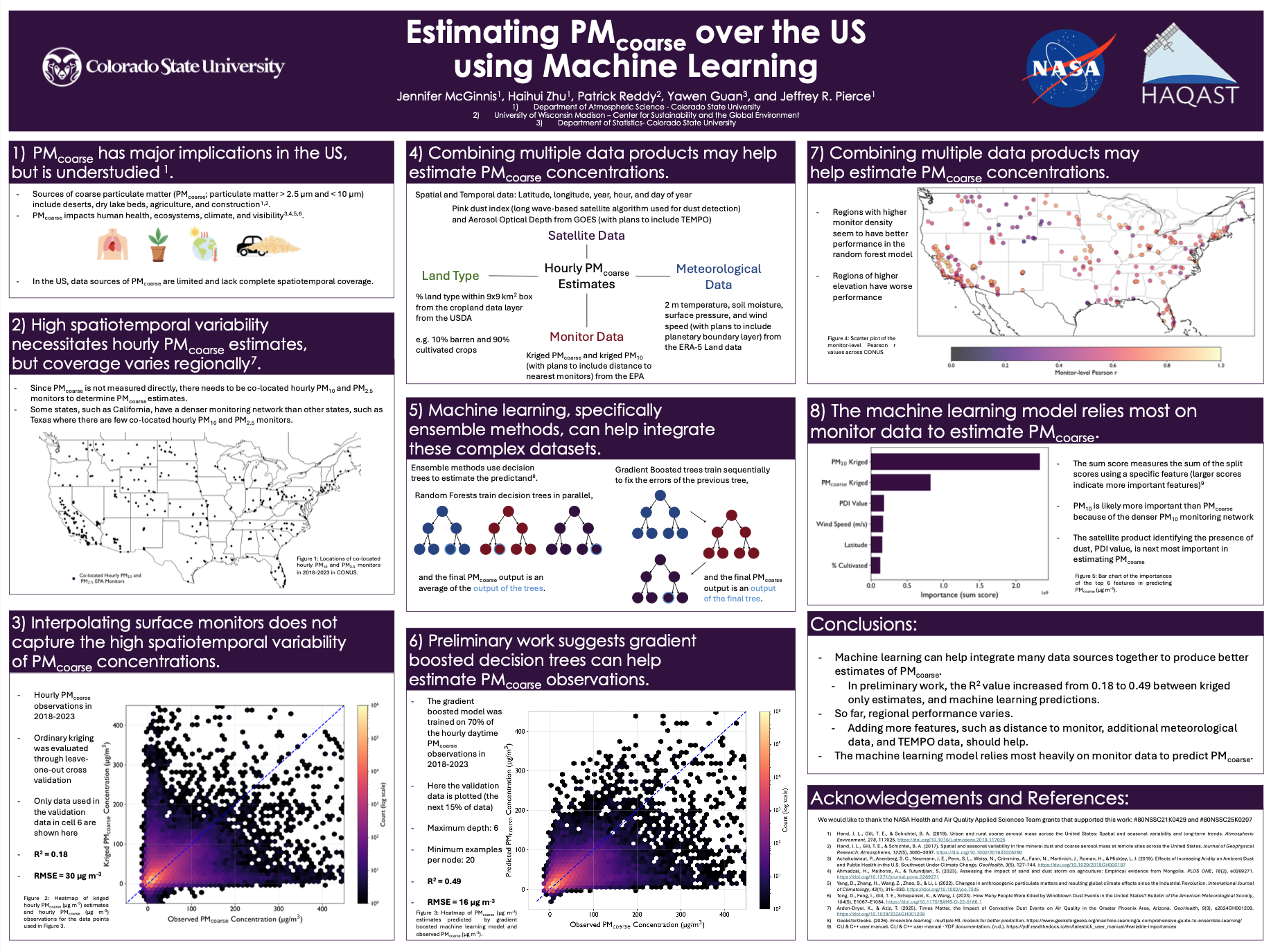
Jennifer McGinnis (Colorado State University)
Estimating PMcoarse over the US using Machine Learning
Jessie (Huanxin) Zhang (University of Iowa)
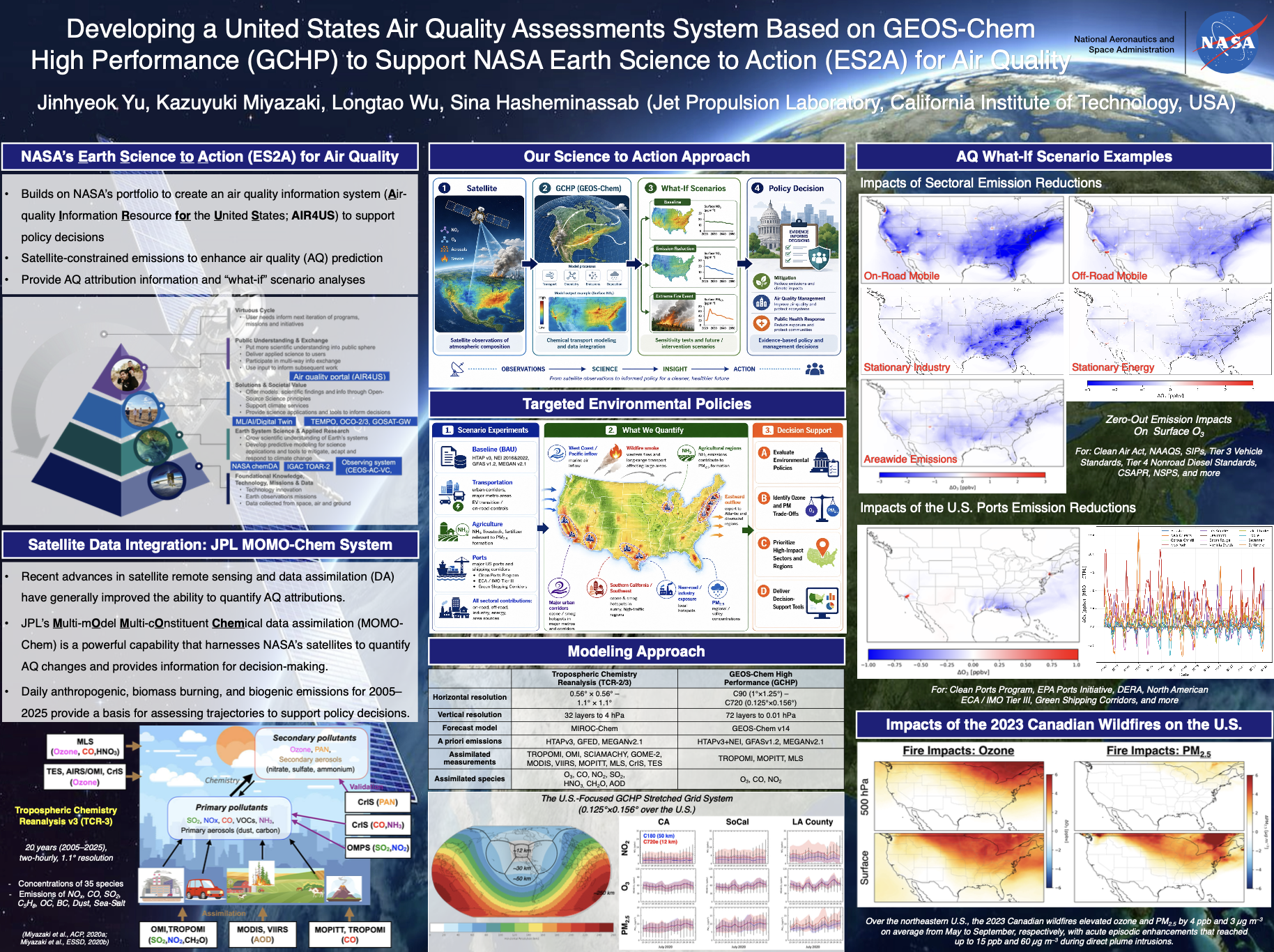
Jin Yu (Jet Propulsion Laboratory)
Developing a United States Air Quality Assessments System Based on GEOS-Chem High Performance (GCHP) to Support NASA Earth Science to Action (ES2A) for Air Quality
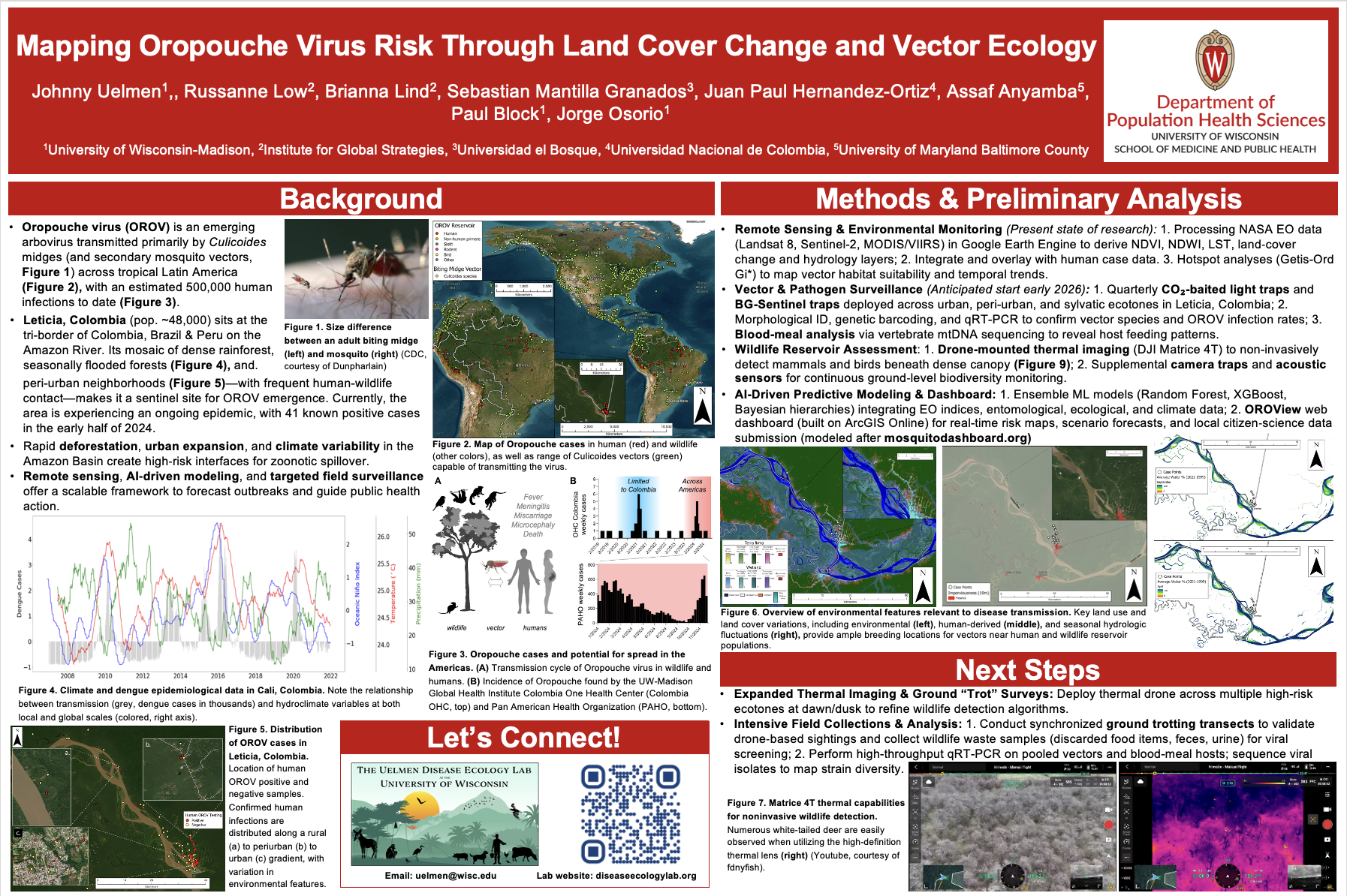
Johnny Uelmen (University of Wisconsin–Madison)
Mapping Oropouche Virus Risk Through Land Cover Change and Vector Ecology
Joseph Kozminski (Lewis University)
Remote Sensing Measurements of NO2 and Formaldehyde with the NASA TEMPO Satellite in Industrial and Energy Generating Areas in Illinois
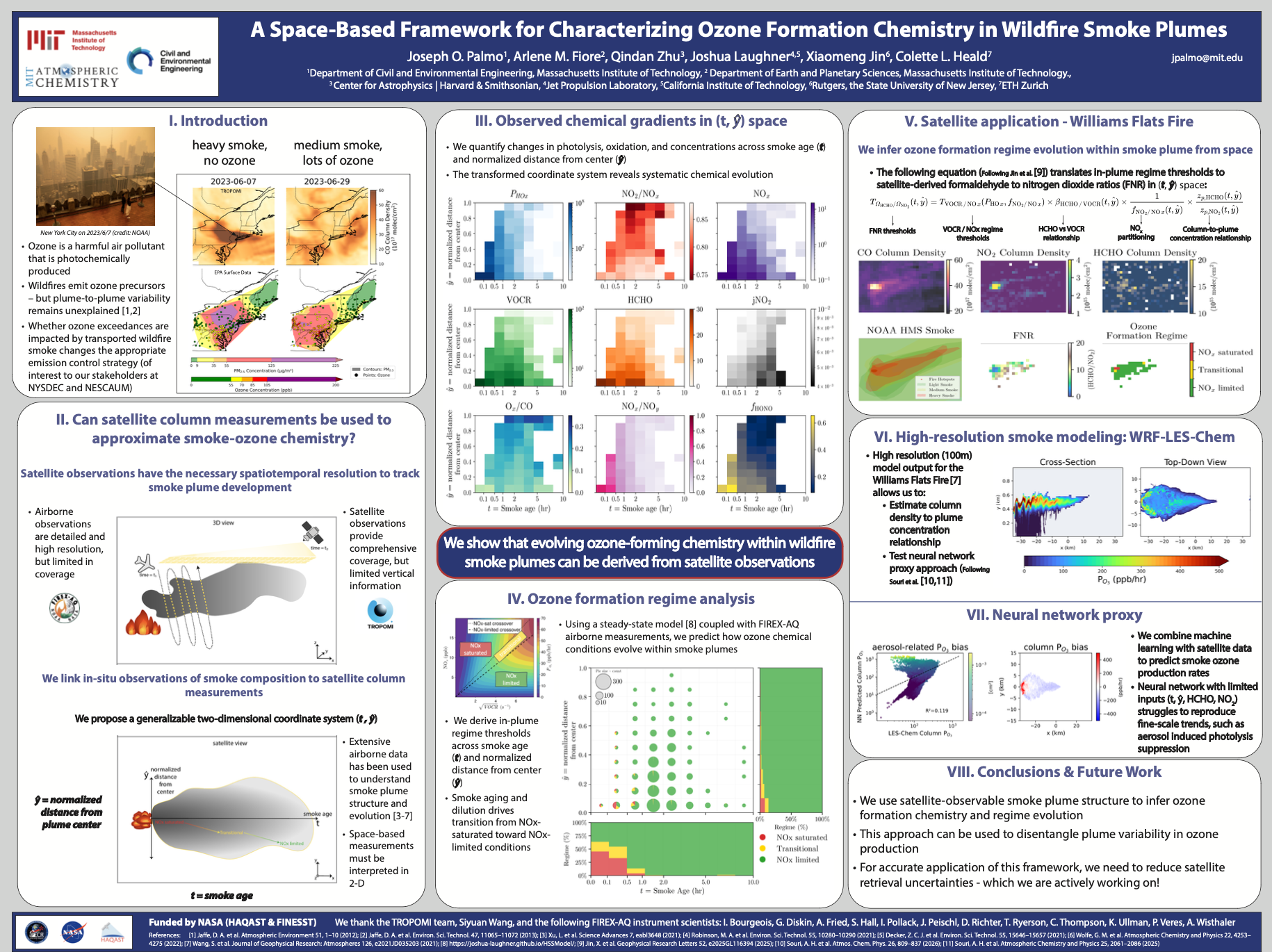
Joseph Palmo (Massachusetts Institute of Technology)
A Space-Based Framework for Characterizing Ozone Formation Chemistry in Wildfire Smoke Plumes
Kane Samuel (District of Columbia, Department of Energy & Environment)
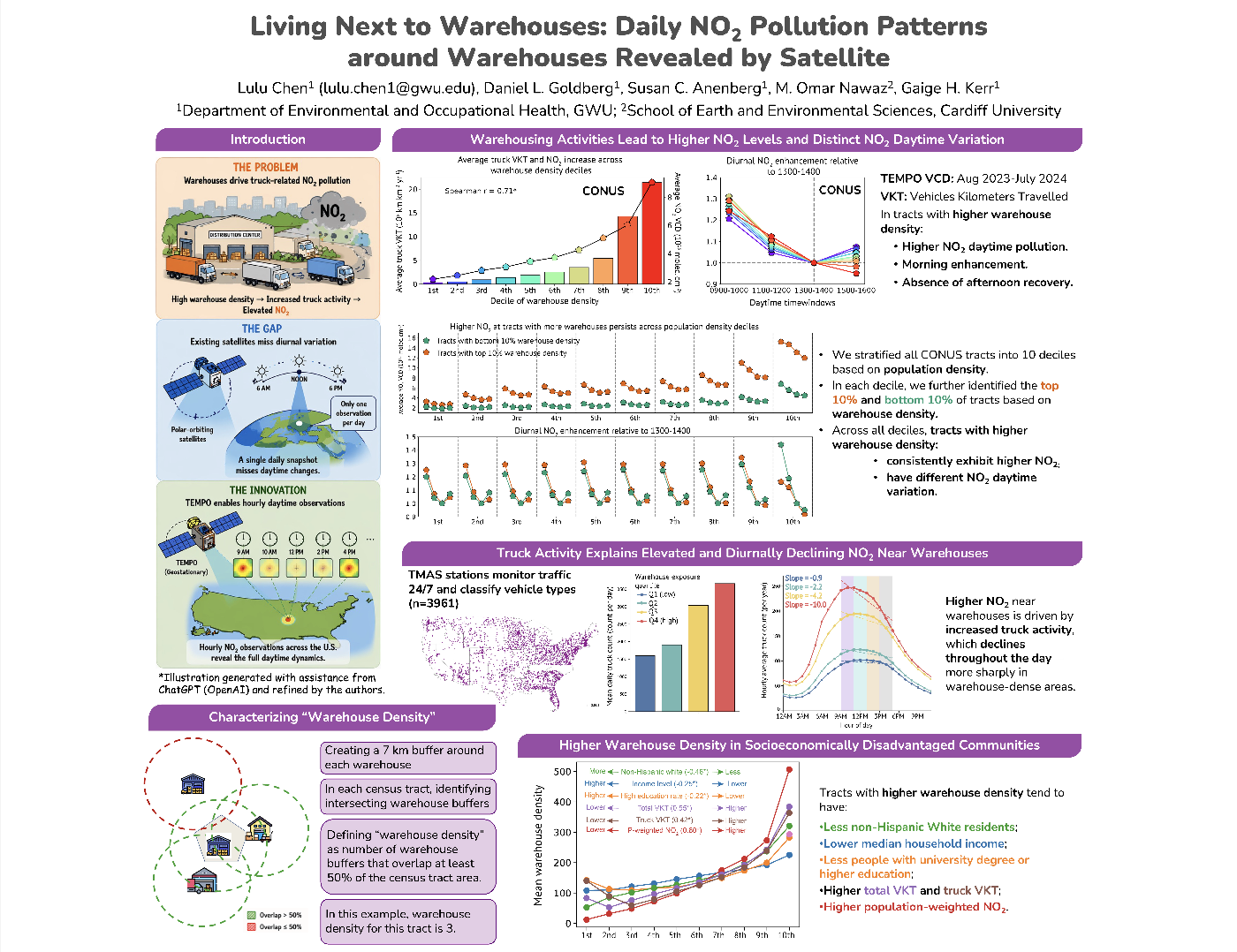
Lulu Chen (George Washington University)
Living Next to Warehouses: Daily NO2 Pollution Patterns around Warehouses Revealed by Satellite
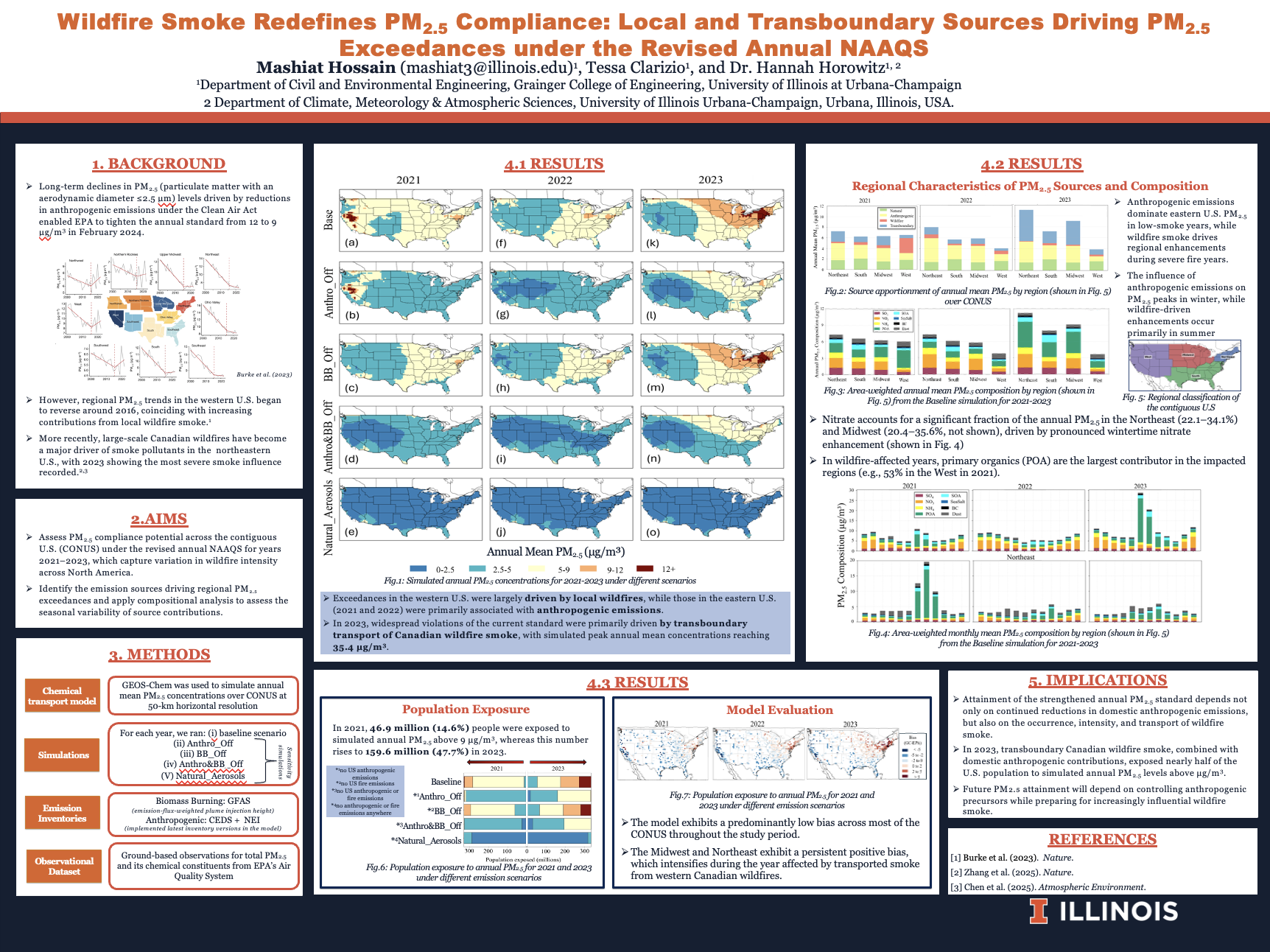
Mashiat Hossain (University of Illinois Urbana-Champaign)
Wildfire Smoke Redefines PM2.5 Compliance: Local and Transboundary Sources Driving PM2.5 Exceedances under the Revised Annual NAAQS
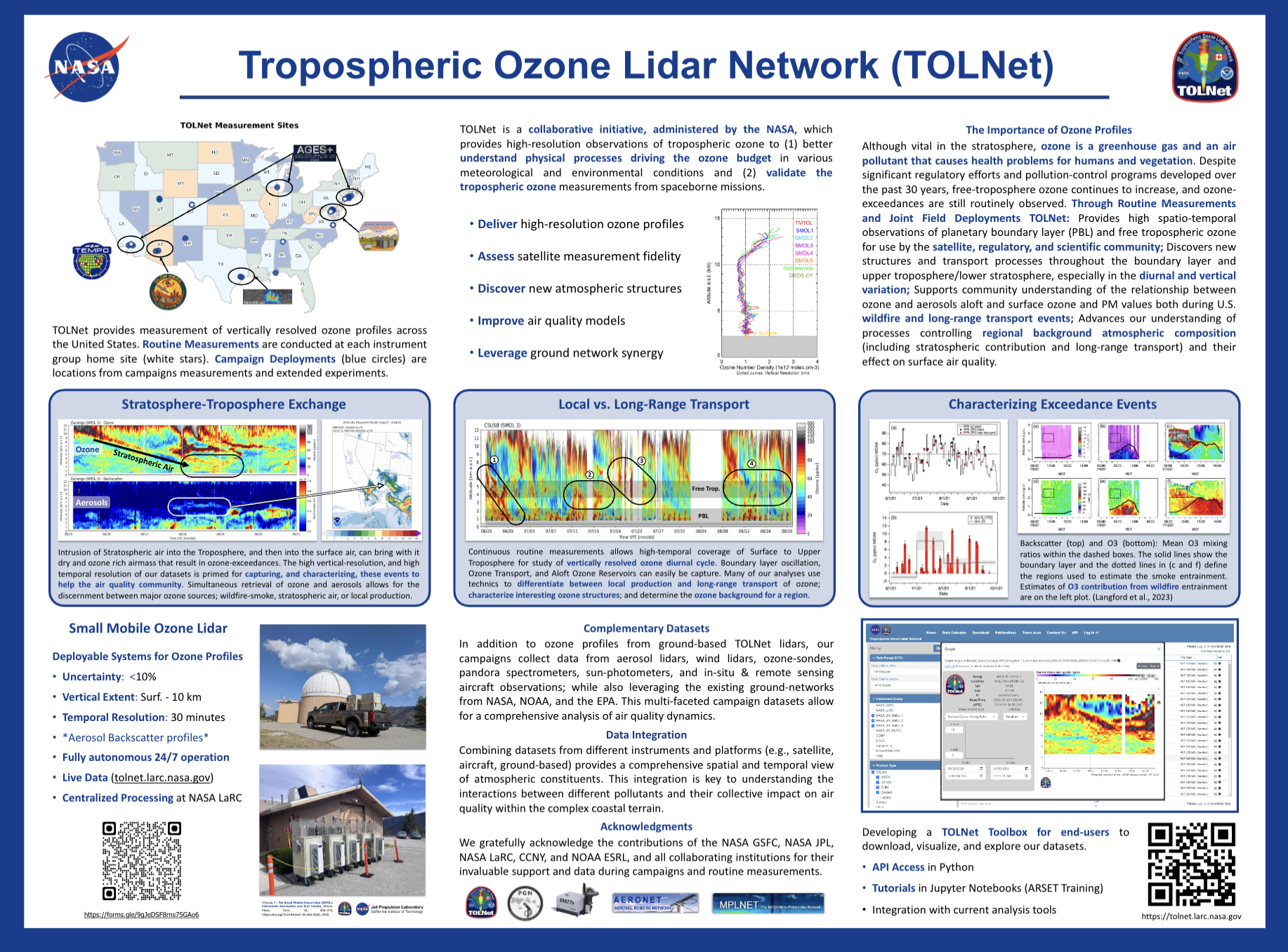
Maurice Roots (NASA Goddard Space Flight Center)
Tropospheric Ozone Lidar Network (TOLNet)
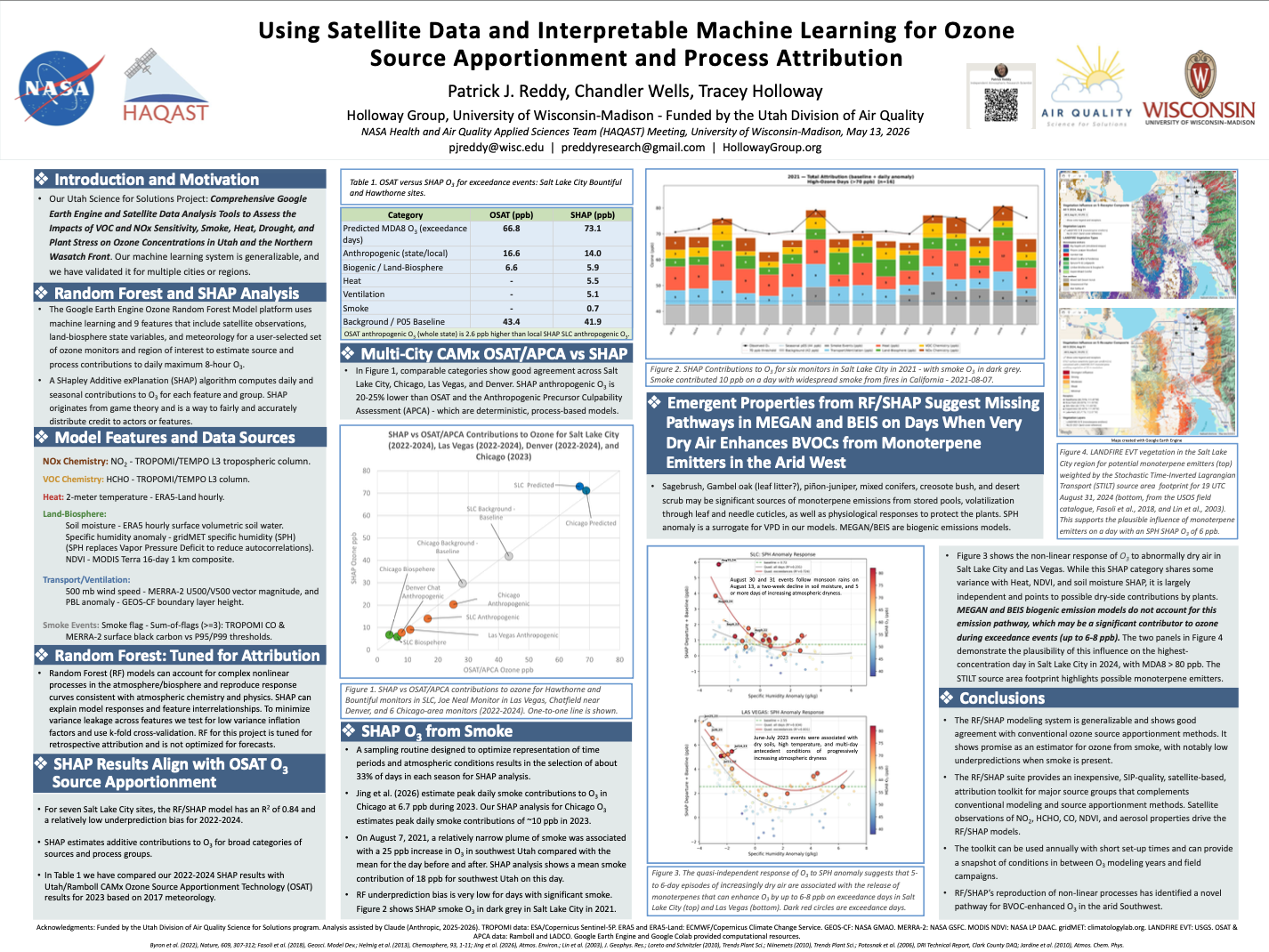
Pat Reddy (University of Wisconsin–Madison)
Using Satellite Data and Interpretable Machine Learning for Ozone Source Apportionment and Process Attribution
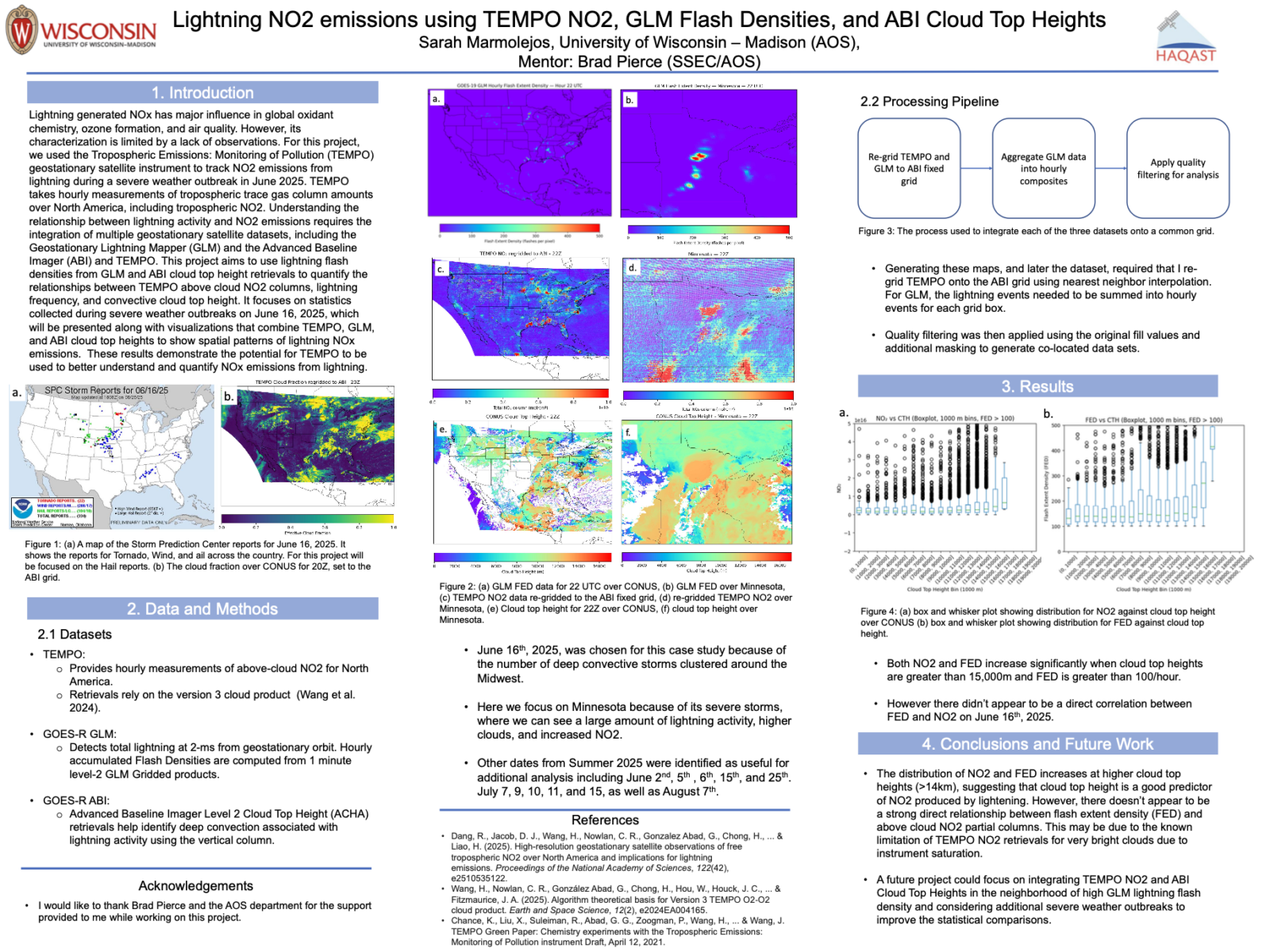
Sarah Marmolejos (University of Wisconsin–Madison)
Lightning NO2 emissions using TEMPO NO2, GLM Flash Densities, and ABI Cloud Top Heights
Sujan Neupane (UMBC GESTAR II, NASA Goddard Space Flight Center)
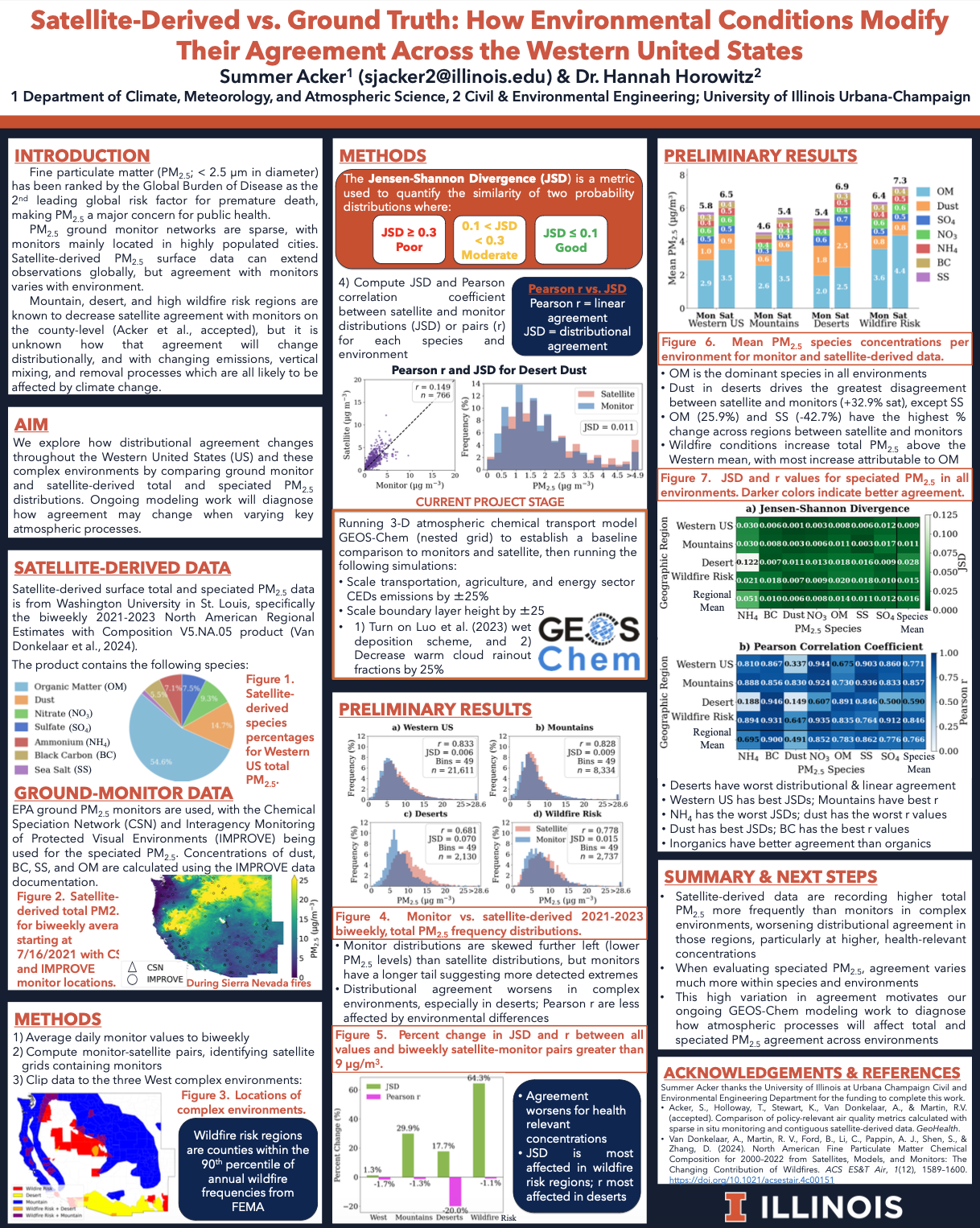
Summer Acker (University of Illinois Urbana-Champaign)
Satellite-Derived vs. Ground Truth: How Environmental Conditions Modify Their Agreement Across the Western United States
Photos
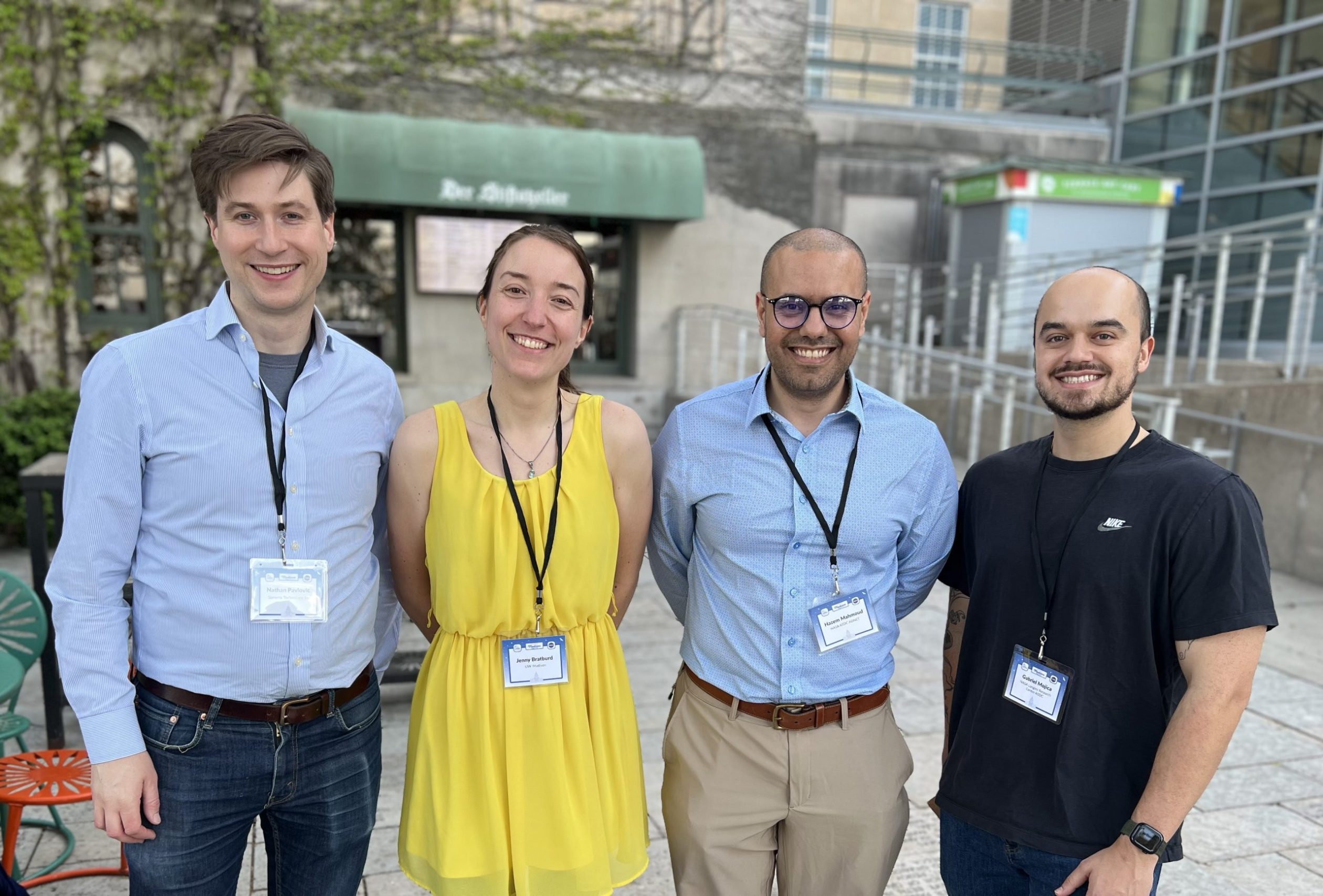
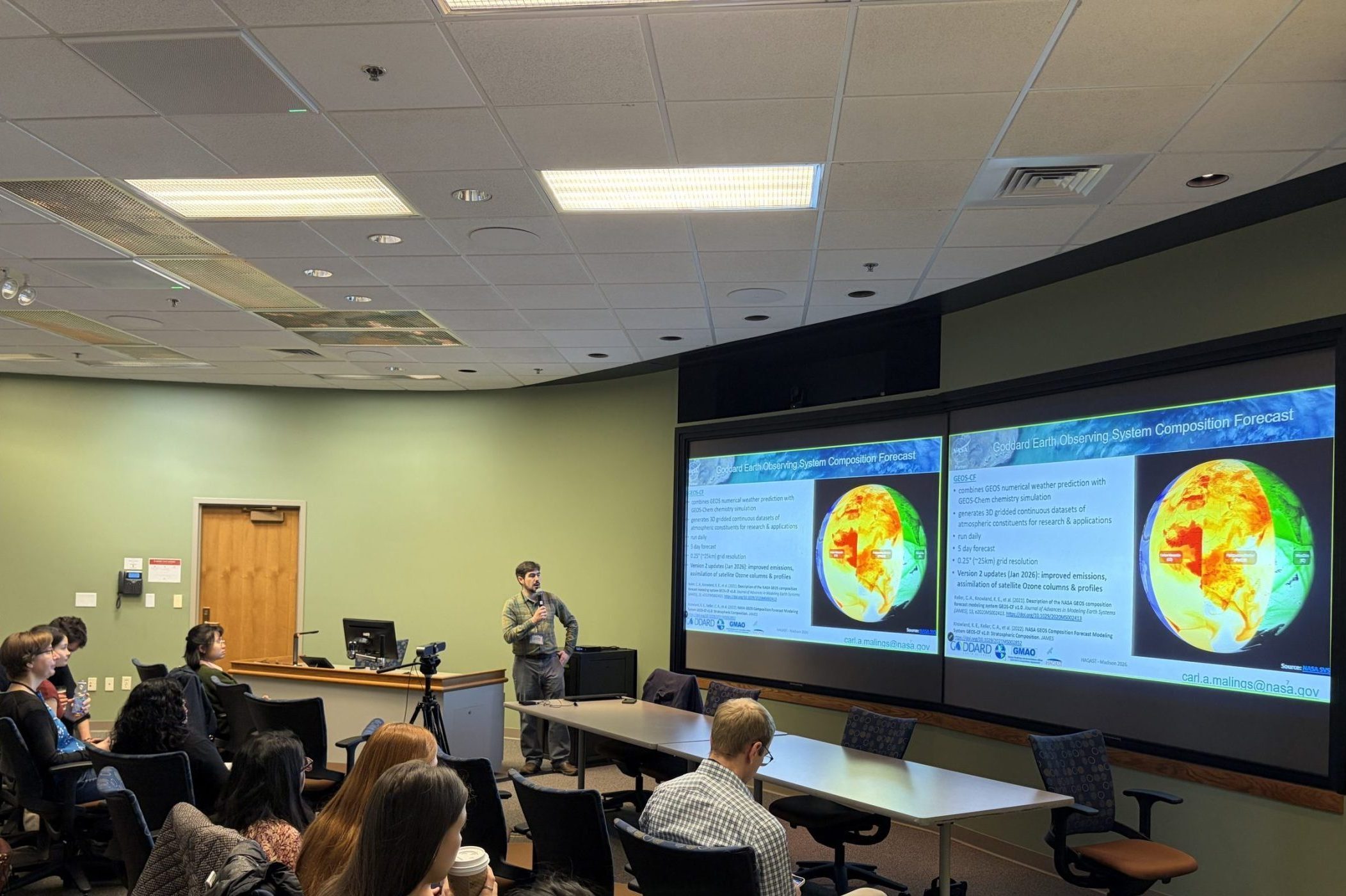
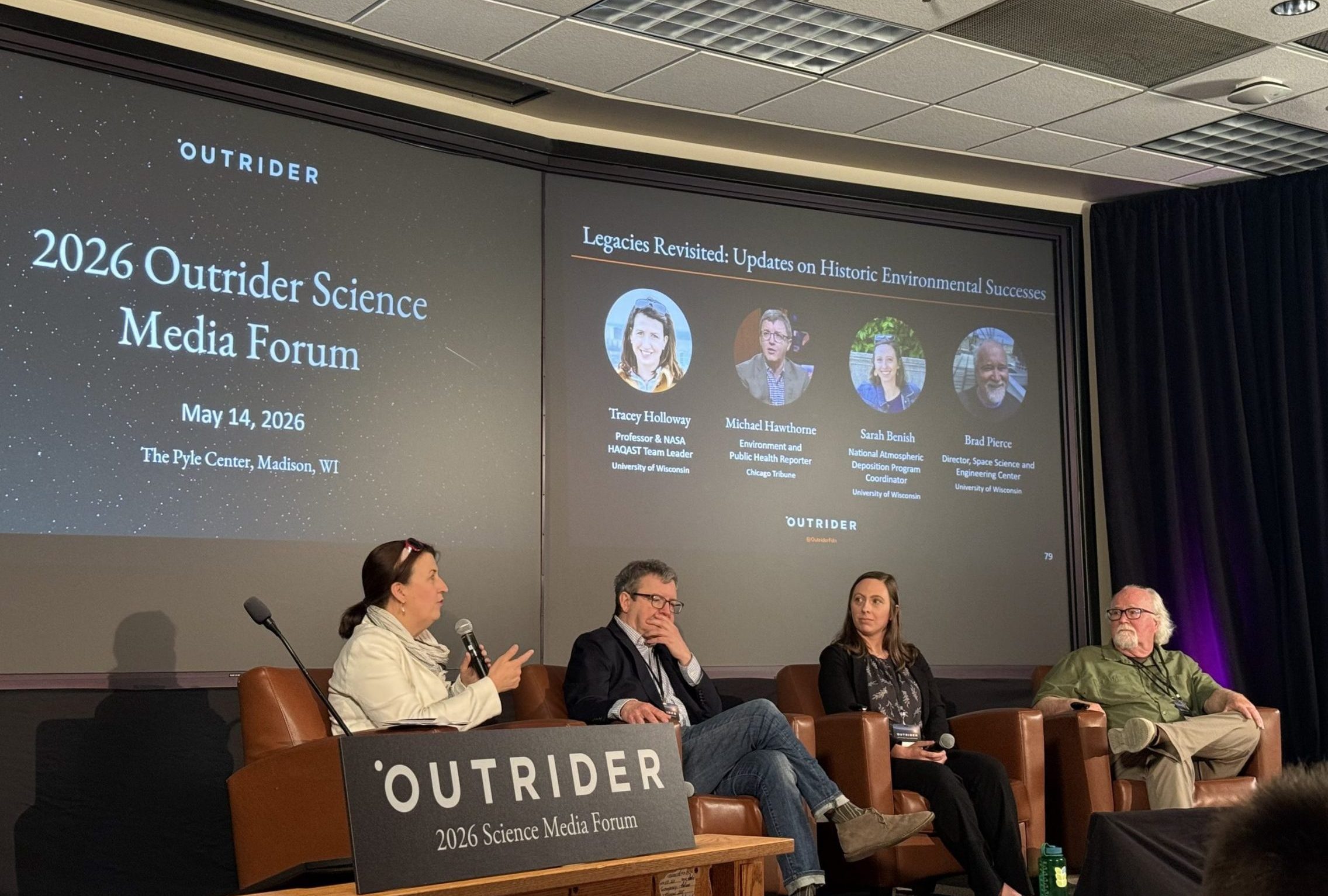
To view the complete collection of photos, click on the button below: